The Sydney skyline has always been a visual measure of the city’s ambitions. On any given morning, cranes stand above railway corridors, waterfront precincts, and residential neighborhoods, quietly marking where Australia’s next chapter is being built. Yet beneath those towering silhouettes lies a decision that rarely attracts public attention: choosing the right crane for the right project. Increasingly, those decisions are becoming as strategic as the buildings themselves.
Across Northern Sydney, where infrastructure upgrades, commercial redevelopment, and residential intensification often compete for limited space, city crane hire northern Sydney has evolved beyond a simple equipment requirement. It has become part of a broader conversation about productivity, safety, urban planning, and how Australia’s largest cities adapt to mounting construction pressures.
The machinery lifting steel, glass, and concrete into place is no longer just supporting development. It is helping determine how efficiently modern cities can grow.
A Different Construction Environment
Australia’s construction sector has entered a period where traditional project planning is being challenged by new realities. Urban land is becoming scarcer. Infrastructure investment remains significant. Projects increasingly overlap within dense metropolitan areas, while tighter delivery schedules leave less room for delays.
Sydney illustrates this transformation particularly well. Large transport projects continue alongside commercial developments, mixed-use precincts, healthcare expansions, and residential construction. Many of these sites operate within established neighborhoods where surrounding buildings, traffic management, environmental considerations, and community expectations all influence construction methods.
As a result, equipment selection has become a strategic planning exercise rather than a procurement formality.
For project managers, the conversation increasingly revolves around operational fit instead of simply lifting capacity. Every decision affects scheduling, logistics, safety compliance, and ultimately project costs.
Why Crane Selection Matters More Than Ever
Construction projects rarely fail because a crane cannot lift a load. They encounter problems when equipment is poorly matched to site conditions.
A development beside an active rail corridor faces very different operational constraints from a suburban warehouse expansion. Likewise, a narrow commercial site surrounded by occupied office buildings demands entirely different lifting solutions than an industrial estate with unrestricted access.
This is why the Australian industry increasingly evaluates cranes according to project environment rather than simply machine size.
In Northern Sydney, where constrained access has become commonplace, city crane hire northern Sydney often begins with site analysis before equipment selection. Factors including street closures, overhead services, neighboring structures, pedestrian movement, and environmental controls all influence which lifting solution is practical.
The result is a more deliberate approach that prioritizes operational efficiency over equipment availability.
Matching Equipment to Project Reality
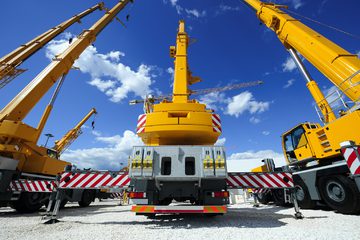
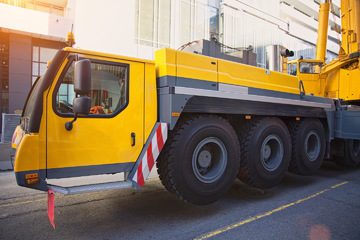
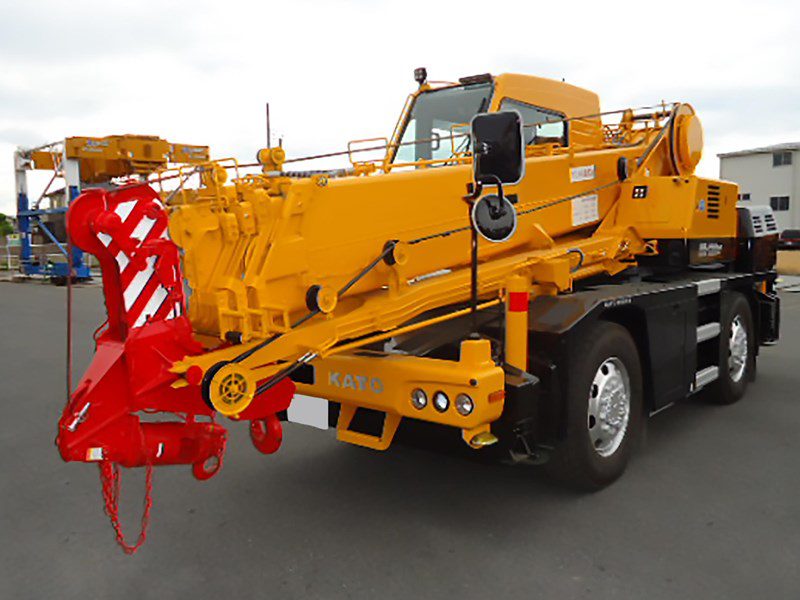
Few machines demonstrate operational flexibility better than those supplied through mobile crane hire. Their ability to relocate quickly between multiple worksites makes them particularly valuable for infrastructure maintenance, utility upgrades, bridge repairs, and short-duration construction activities.
Rather than remaining fixed for months, mobile cranes support projects where lifting requirements shift rapidly across locations. This flexibility has become increasingly important as Australian cities undertake simultaneous transport, utilities, and public infrastructure upgrades without halting normal urban activity.
High-rise construction presents an entirely different challenge.
Here, tower crane hire supports projects that require continuous vertical lifting over extended construction periods. Once installed, tower cranes become integral components of the building process itself, enabling coordinated movement of structural materials, mechanical systems, façade elements, and finishing components throughout the construction cycle.
Their efficiency becomes especially valuable on large developments where maintaining uninterrupted workflows directly affects completion schedules.
Urban density introduces another layer of complexity.
In tightly constrained environments, luffing crane hire has become increasingly relevant because traditional tower cranes often require wider slewing areas than crowded city blocks can provide. Luffing jib cranes reduce the operational footprint by raising and lowering their jib rather than sweeping broadly across surrounding airspace.
For developments positioned between existing commercial towers or alongside occupied residential buildings, this design allows lifting operations to continue while minimizing interference with neighboring properties.
These distinctions highlight an increasingly important reality: modern construction success depends less on possessing the biggest crane than on deploying the most appropriate one.
Northern Sydney as a Case Study
Northern Sydney offers an unusually clear example of how urban development is changing equipment decisions.
Established business districts continue evolving through commercial redevelopment while nearby residential neighborhoods experience higher-density housing projects. At the same time, schools, hospitals, transport infrastructure, and public amenities require ongoing expansion to accommodate population growth.
Each project operates within a mature urban environment where available construction space is limited and disruption must be carefully managed.
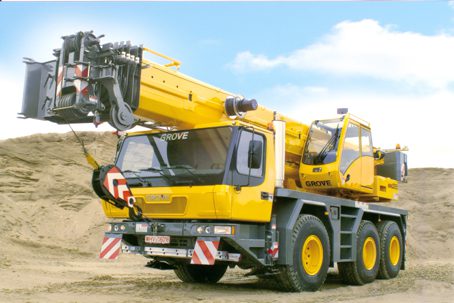
An infrastructure contractor upgrading utilities may require all-terrain crane hire Sydney because equipment must travel efficiently between multiple sites while remaining capable of operating on varying ground conditions. A nearby commercial tower may rely on a fixed tower crane throughout its construction program. Just streets away, a narrow redevelopment parcel could depend on a luffing crane to avoid oversailing neighboring buildings.
Although each project contributes to the same urban landscape, their lifting strategies differ substantially because their operational constraints differ.
This growing diversity reflects a broader shift in Australian construction thinking: successful projects increasingly begin with context rather than equipment.
Safety Is Driving Industry Change
The evolution of crane operations is also being shaped by Australia’s regulatory environment.
Work health and safety expectations have steadily expanded over the past decade, with state regulators and national standards placing greater emphasis on planning, operator competency, documented lift procedures, equipment maintenance, and ongoing risk assessment.
Many operators now integrate GPS fleet monitoring, digital inspection records, electronic maintenance tracking, and sophisticated load management systems into daily operations. These technologies improve visibility across projects while supporting compliance with increasingly detailed reporting requirements.
Advanced monitoring systems also provide project teams with more accurate operational data, allowing lifting activities to be coordinated alongside broader construction schedules.
Importantly, technology has not replaced experienced operators.
Instead, digital systems increasingly support professional judgment by improving situational awareness, equipment reliability, and communication between site teams.
The industry’s direction suggests that future competitiveness will depend as much on operational intelligence as mechanical capability.
Building More Sustainably
Sustainability has also entered conversations traditionally focused only on productivity.
Reducing unnecessary equipment movements, selecting appropriately sized cranes, minimizing idle operating time, and improving logistics planning all contribute to lower fuel consumption and reduced emissions.
While cranes themselves represent only one component of a project’s environmental footprint, equipment utilization increasingly aligns with broader sustainability objectives established by developers, government agencies, and institutional investors.
Efficient lifting strategies are gradually becoming part of responsible project delivery rather than simply operational efficiency.
Looking Beyond the Skyline
The cranes visible above Sydney’s skyline are often interpreted as symbols of economic confidence. Yet their greater significance lies elsewhere.
They represent thousands of planning decisions balancing engineering constraints, regulatory expectations, labor availability, environmental responsibilities, and urban complexity. What appears from street level as straightforward construction increasingly reflects sophisticated coordination behind the scenes.
As Australian cities continue growing upward and inward, those decisions will only become more consequential.
The future of urban development will depend not simply on building more, but on building more intelligently within increasingly constrained environments. In that future, crane strategy will remain largely invisible to the public. For construction leaders, however, it will continue shaping project outcomes long before the first beam leaves the ground.
The evolution of city crane hire northern Sydney therefore tells a larger story than equipment selection alone. It reflects how Australia’s construction industry is adapting to denser cities, higher expectations, and a future where infrastructure success depends as much on thoughtful planning as engineering execution.