Building the Future in Smaller Spaces
On a clear morning in Sydney, the city’s skyline reveals more than another day of construction. Cranes rise above office towers, apartment developments, transport corridors, and mixed-use precincts, each carefully positioned within increasingly constrained urban environments. To most people, these machines simply mark progress. For project managers, engineers, and urban planners, however, they represent something more significant: a series of strategic decisions that determine whether modern infrastructure can be delivered safely, efficiently, and with minimal disruption.
Among those decisions, luffing crane hire has become an increasingly important consideration. As Australia’s largest cities continue to build upward rather than outward, the equipment chosen for a project is no longer simply about lifting heavy materials. It reflects how the construction industry is adapting to tighter spaces, stricter regulations, evolving technology, and rising expectations for productivity.
The growing role of specialised cranes offers a revealing lens into the broader transformation taking place across Australian construction.
Why Crane Selection Matters More Than Ever
Australia’s construction sector has entered a period where complexity often outweighs scale. Major developments still dominate city skylines, but the conditions under which they are built have changed dramatically.
Sydney provides one of the clearest examples. New projects increasingly occupy narrow parcels surrounded by existing residential towers, heritage buildings, transport infrastructure, and busy commercial streets. Every delivery, every lift, and every piece of equipment must operate within carefully managed constraints.
These pressures have intensified following the pandemic, as delayed infrastructure projects returned alongside renewed residential demand and government investment in transport and public facilities. At the same time, labour shortages have encouraged contractors to seek greater operational efficiency, while tighter project schedules leave less room for unexpected delays.
In this environment, crane procurement has evolved into a strategic planning exercise. Rather than asking which machine can lift the heaviest load, project teams increasingly ask which equipment best matches the physical realities of the site and the broader objectives of the project.
Different Projects Require Different Crane Strategies
Australia’s construction industry relies on several crane categories because no single solution fits every project.
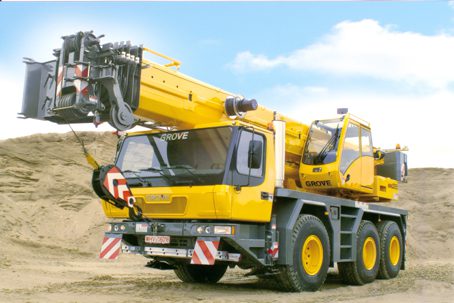
Mobile crane hire remains essential where flexibility is the priority. Civil infrastructure projects, bridge maintenance, industrial facilities, and utility upgrades frequently require cranes capable of travelling between locations and being deployed with relatively short setup times. Their versatility makes them particularly valuable for projects spread across multiple work zones or changing construction phases.
Long-duration commercial developments present different requirements. For high-rise residential towers, hospitals, and office buildings, tower crane hire provides continuous lifting capacity throughout months or even years of construction. Their fixed position allows teams to move structural steel, concrete components, and building materials efficiently as each floor progresses.
Dense urban environments introduce another level of complexity. Construction sites surrounded by neighbouring buildings leave little room for conventional crane movements, particularly where overlapping airspace must be avoided.
That is where luffing crane hire has become increasingly significant. Unlike traditional tower cranes with wide horizontal jibs, luffing cranes raise and lower their jib angle, allowing operators to lift materials with greater precision while occupying far less overhead space. This capability makes them particularly suited to inner-city developments where every metre of clearance matters.
The growing demand for these cranes reflects broader changes in Australia’s cities rather than changing preferences within the equipment industry itself.
Sydney’s Urban Density Is Changing Procurement Decisions
Few cities illustrate these pressures better than Sydney.
Large redevelopment projects increasingly take place beside operating businesses, occupied apartment buildings, rail corridors, and heritage precincts. Construction cannot simply occupy surrounding streets or neighbouring properties without affecting thousands of people who continue living and working nearby.
Early project phases may require all-terrain crane hire Sydney operations to position heavy structural components before permanent lifting systems are installed. Their mobility allows contractors to navigate complex access conditions while supporting multiple construction activities across the site.
As buildings rise and available operating space becomes increasingly restricted, project requirements often shift toward equipment capable of working efficiently within confined airspace. In many urban developments, this transition naturally leads to greater reliance on luffing crane hire, demonstrating how crane selection evolves alongside the construction process itself.
Rather than representing competing technologies, different crane types increasingly form part of a coordinated lifting strategy designed around each project’s changing requirements.
Regulation Is Quietly Raising Expectations
Australia’s crane industry has also evolved alongside a more rigorous regulatory environment.
Work Health and Safety legislation, supported by regulators such as SafeWork NSW and equivalent authorities across other states, has strengthened expectations surrounding lifting operations, operator competency, equipment inspections, and site-specific risk management.
Compliance has become embedded within project planning rather than treated as a final checklist before work begins.
Many operators now incorporate GPS fleet management, electronic maintenance records, load monitoring systems, and digital inspection reporting into everyday operations. These technologies provide project teams with greater visibility into equipment performance while helping identify potential issues before they become operational risks.
Equally important is the continued emphasis on operator training and certification. As lifting operations become more technically demanding within dense urban environments, professional judgement remains as important as technological assistance.
Digital systems improve awareness, but experienced operators continue to make the decisions that protect workers, surrounding properties, and public infrastructure.
Sustainability Is Becoming Part of Equipment Planning
Environmental performance is also influencing crane procurement in ways that receive relatively little public attention.
Construction companies face increasing pressure to reduce emissions, minimise unnecessary equipment movements, and improve fuel efficiency throughout major developments. Equipment selection therefore contributes not only to productivity but also to broader sustainability objectives.
Selecting the right crane for the right task reduces unnecessary mobilisation, limits operational downtime, and improves overall project coordination. These efficiencies may appear incremental when viewed individually, but across Australia’s expanding infrastructure pipeline they represent meaningful improvements in resource management.
As governments, investors, and developers place greater emphasis on sustainable construction practices, equipment procurement is becoming closely connected to wider conversations about environmental responsibility and long-term project performance.
A Signal of Australia’s Changing Construction Future
The cranes visible above Australia’s cities tell a story that extends beyond engineering. They reveal how urban development is adapting to population growth, land scarcity, evolving regulations, and rising expectations around safety and efficiency.
The increasing importance of luffing crane hire is not simply a reflection of changing equipment preferences. It illustrates how construction strategies themselves are evolving to meet the realities of denser cities where every square metre, every lifting operation, and every scheduling decision carries greater significance.
Australia’s next generation of infrastructure will depend on more than ambitious architectural designs or larger investment budgets. Success will increasingly be determined by countless operational choices made long before buildings begin to take shape.
Among those choices, crane selection has become one of the clearest indicators of how the industry is adapting to a future defined by complexity rather than scale. As Sydney and other Australian cities continue to grow upward, the quiet evolution of lifting strategy may prove just as important as the skylines it helps create.