Look up in any Australian city undergoing change—and most of them are—and you’ll notice that cranes are no longer occasional interruptions to the skyline. They are постоян fixtures, as characteristic as glass façades or steel frameworks. Their presence signals more than construction; it reflects a deeper shift in how cities are being built, financed, and imagined. At the centre of that shift sits an increasingly important, if often overlooked, part of the industry: crane hire.
The growing reliance on mobile crane hire, tower crane hire, and luffing crane hire is not simply a matter of convenience. It is a response to the evolving demands of urban density, infrastructure expansion, and economic uncertainty. In Australia, where geography and growth patterns vary dramatically, crane hire has become a kind of connective tissue—linking ambition to execution, and design to reality.
A Changing Construction Economy
For much of the past, large construction firms tended to own the heavy machinery they relied on. Cranes were long-term assets, maintained and deployed across projects as needed. But that model has gradually given way to something more flexible. Hiring cranes allows companies to align their equipment precisely with the needs of individual projects, avoiding the financial and logistical burden of ownership.
This shift mirrors broader changes in the construction economy. Projects are more varied, timelines less predictable, and margins often tighter. Hiring equipment introduces a level of adaptability that ownership cannot easily match. It also redistributes risk, allowing firms to scale up or down without being tied to underused assets.
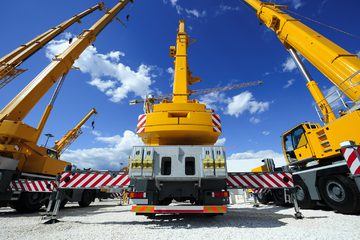
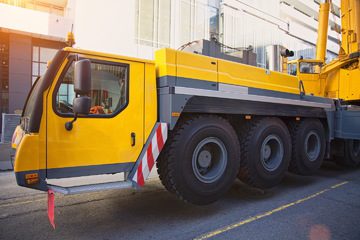
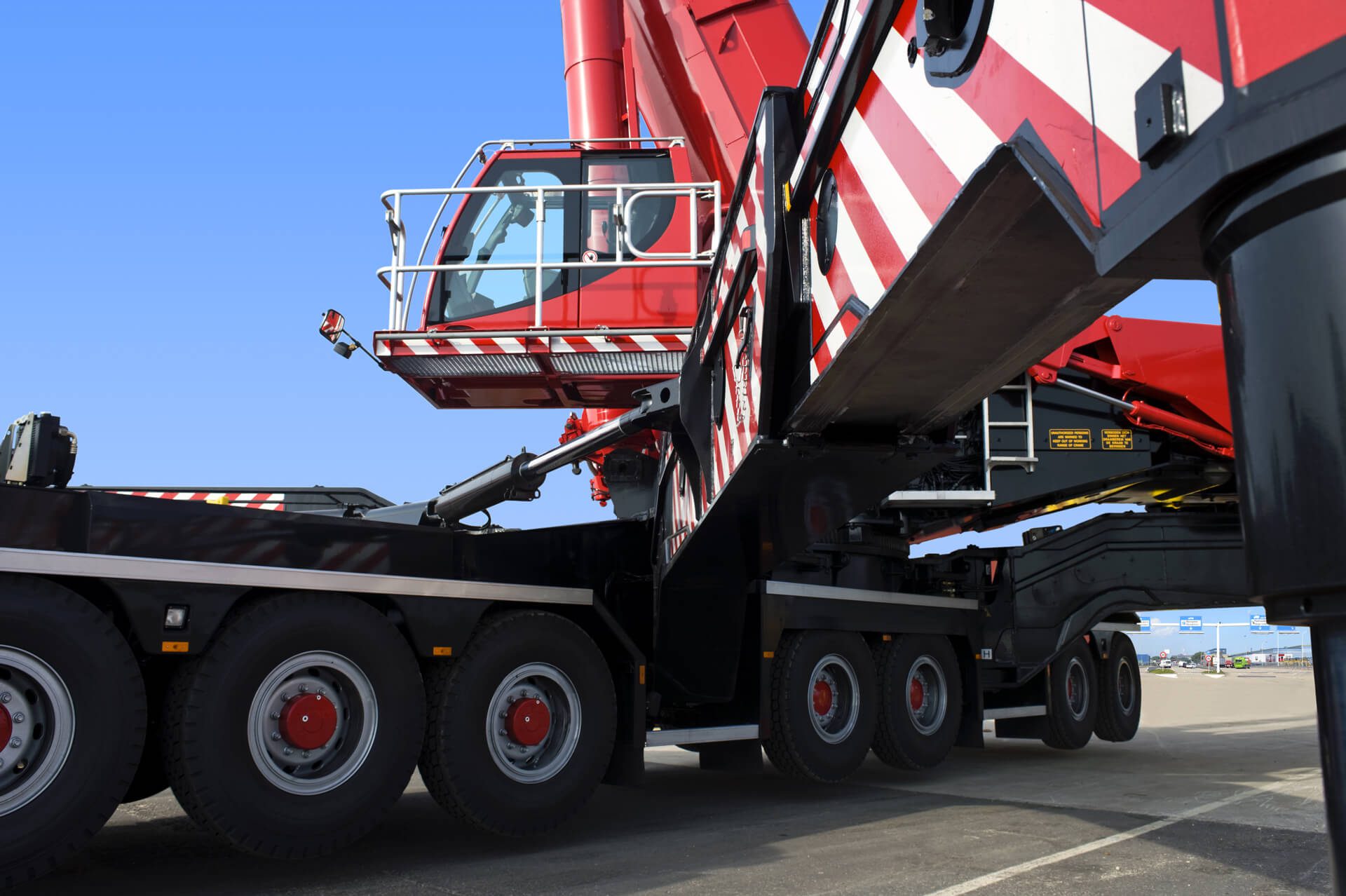
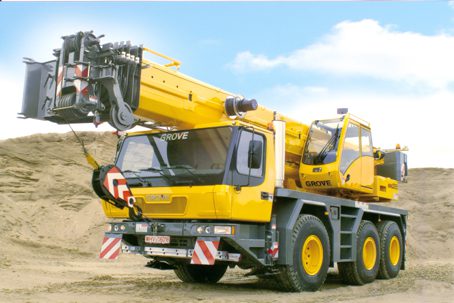
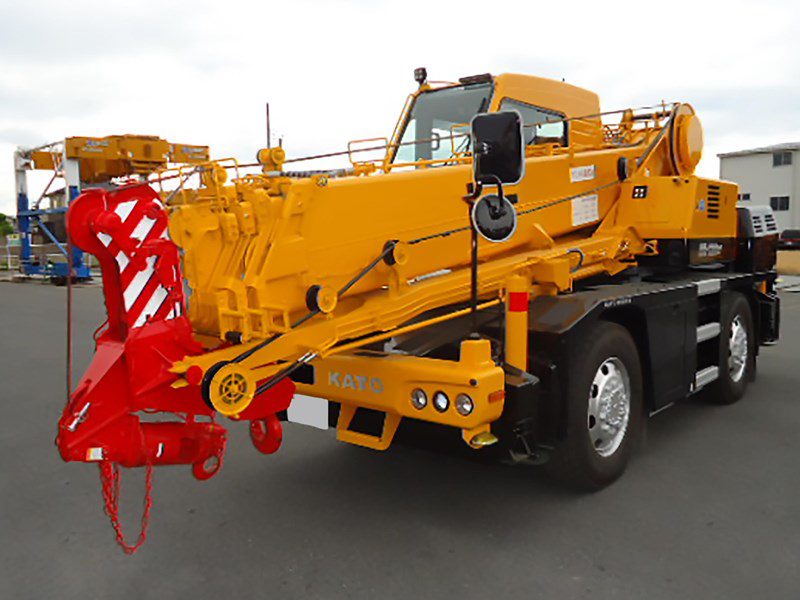
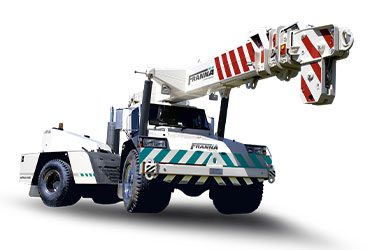
Mobile crane hire exemplifies this new logic. These cranes, mounted on trucks or all-terrain vehicles, are designed for movement. They are essential on infrastructure projects that stretch across large distances—road upgrades, rail expansions, energy installations—where work progresses in stages rather than at a fixed point. Their ability to relocate quickly makes them indispensable in a country where construction sites can be separated by hundreds of kilometres.
Yet mobility alone does not address the pressures shaping Australia’s cities. For that, the industry has had to rethink how it builds upward.
Density and the Rise of the Tower Crane
In urban centres, land is both limited and expensive. The response has been predictable but transformative: cities are growing vertically. Apartment towers, office buildings, and mixed-use developments are redefining skylines, particularly in areas like northern Sydney, where population growth and economic activity continue to intensify.
The increasing demand for tower crane hire northern sydney reflects this reality. These cranes are not just tools; they are integral to the process of vertical construction. Fixed in place for extended periods, they provide the reach and lifting capacity needed to move heavy materials to significant heights. More importantly, they enable a level of continuity. Once installed, a tower crane becomes part of the building process itself, supporting each stage as the structure rises floor by floor.
What makes this especially significant in dense areas is the coordination involved. Construction sites rarely exist in isolation. Multiple projects may be underway within a small radius, each with its own cranes operating in shared airspace. The result is a kind of aerial choreography, governed by strict planning and regulatory oversight.
Tower cranes, in this context, are both powerful and constrained. They are designed for height and strength, but they must operate within increasingly narrow margins. And as cities grow denser still, even these machines encounter limits.
The Subtle Advantage of the Luffing Crane
In the tightest urban environments, where buildings press closely against one another and space is measured in metres, luffing crane hire has become an increasingly common solution. Unlike traditional tower cranes, which extend horizontally, luffing cranes can raise and lower their jib. This allows them to operate within a reduced swing radius, minimizing the risk of encroaching on neighbouring properties.
It is a technical distinction, but one with far-reaching implications. In cities where construction must coexist with existing infrastructure, businesses, and residents, precision matters as much as power. Luffing cranes offer a way to continue building upward without overextending into surrounding spaces.
Their growing use speaks to a broader shift in urban construction. Projects are no longer defined solely by their scale, but by their ability to integrate into complex, already-developed environments. In that sense, luffing cranes are not just specialized equipment; they are a response to the changing geometry of cities.
Contrasting Roles Across the Landscape
What becomes clear, when viewed together, is that different types of crane hire serve fundamentally different purposes. Mobile crane hire supports movement and adaptability across large, often remote projects. Tower crane hire underpins the vertical ambitions of urban development. Luffing crane hire addresses the constraints of density, enabling construction in spaces where traditional approaches might fail.
These distinctions are not merely technical. They reflect the diverse conditions under which modern construction operates in Australia. A wind farm in a regional area, a high-rise in northern Sydney, and an infill development in a crowded inner-city block each present unique challenges. The choice of crane is, in effect, a response to those challenges—a decision shaped by geography, economics, and regulation.
Safety in an Increasingly Complex Environment
As crane operations become more varied, the expectations surrounding safety have grown correspondingly. Australia’s regulatory framework has evolved to reflect the risks associated with heavy lifting, particularly in populated areas. What was once a reactive approach—responding to incidents as they occurred—has shifted toward proactive planning and prevention.
Today, crane operations are supported by detailed lift plans, real-time monitoring systems, and rigorous training requirements. Operators must account for factors such as wind conditions, load distribution, and site constraints before a lift even begins. The margin for error is small, and the consequences of miscalculation can be significant.
This emphasis on safety is not simply regulatory; it is cultural. As construction moves closer to where people live and work, the industry has had to adapt its practices accordingly. Crane hire companies are now expected to meet high standards not only in equipment maintenance but also in operational discipline.
Technology and the Modern Construction Site
Technology is playing an increasingly central role in how cranes are deployed and managed. Digital tools allow project teams to simulate crane movements before they occur, identifying potential conflicts and optimizing placement. Building Information Modelling has made it possible to integrate crane logistics into the design phase, rather than treating them as an afterthought.
Sensors and telematics systems provide continuous data on crane performance, enabling predictive maintenance and reducing downtime. These advancements are changing the tempo of construction, making it more precise and, in many cases, more efficient.
For workers, this shift introduces new demands. Operating a crane now involves not only physical skill but also an understanding of digital systems and data. The role is becoming more complex, reflecting the broader transformation of the industry.
Pressures That Drive Innovation
Despite these developments, the crane hire sector operates under significant pressure. Demand is closely tied to the construction cycle, which can fluctuate with economic conditions and government investment. Periods of rapid growth can strain resources, while downturns require careful adjustment.
Labour shortages remain a persistent challenge. Skilled operators are essential, yet difficult to replace quickly. At the same time, environmental considerations are beginning to shape decision-making, prompting discussions about fuel efficiency and emissions.
These pressures, however, are not purely limiting. They also encourage innovation, pushing the industry to find new ways of working that are both efficient and sustainable.
The Meaning Behind the Machinery
It is tempting to see cranes as symbols of progress in the most straightforward sense—evidence that something new is being built. But their significance runs deeper. They represent the systems and decisions that make construction possible: the balance between flexibility and stability, the negotiation between space and ambition, the integration of technology and human skill.
In Australia, the increasing reliance on mobile crane hire, tower crane hire, and luffing crane hire reflects a construction sector that is adapting to a more complex set of demands. The prominence of tower crane hire in northern Sydney is not just a local phenomenon; it is a reflection of broader forces shaping cities across the country.
The skyline, after all, is not just an outcome. It is a process—one that unfolds slowly, deliberately, and often out of view. The cranes that hover above it are part of that process, quietly enabling the transformation of space into place.
And so, the next time you notice one of these machines suspended against the sky, it may be worth considering what it represents. Not just the building beneath it, but the evolving logic of how cities grow—and the tools that make that growth possible.