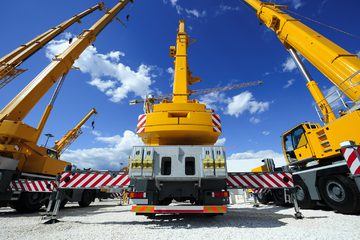
Walk through any rapidly changing precinct in Sydney or Melbourne, and you’ll notice something curious: the skyline is no longer defined solely by buildings, but by the machines assembling them. Cranes hover above half-finished towers, pivoting with deliberate precision, their movements almost meditative against the rush below. They are so constant, so embedded in the visual language of growth, that it’s easy to overlook their significance.
Yet crane hire—whether mobile crane hire, tower crane hire, or the increasingly vital luffing crane hire—has become one of the most telling indicators of how Australia is navigating a new phase of urban development. These machines are not just lifting materials; they are enabling a shift in how cities expand, densify, and adapt to competing pressures of space, safety, and sustainability.
Growth Without Space
Australia’s urban story has long been associated with sprawl—suburbs stretching outward, supported by roads and infrastructure that follow. That pattern still exists, but it is no longer sufficient. Population growth, housing demand, and infrastructure investment have forced cities to look inward. Density is no longer optional; it is policy.
But building within an existing city is fundamentally different from building on its edges. Space is limited, access is constrained, and construction must coexist with daily life. This is where crane hire moves from being a background service to a central strategic decision.
The choice of crane determines not just how a structure is built, but whether it can be built at all.
Mobility as a Foundation
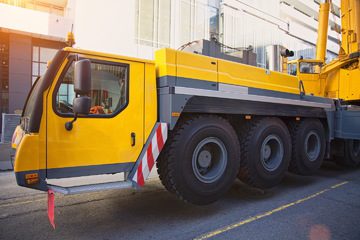
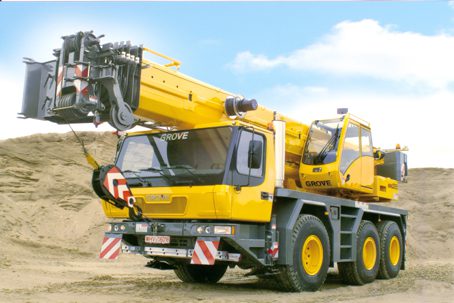
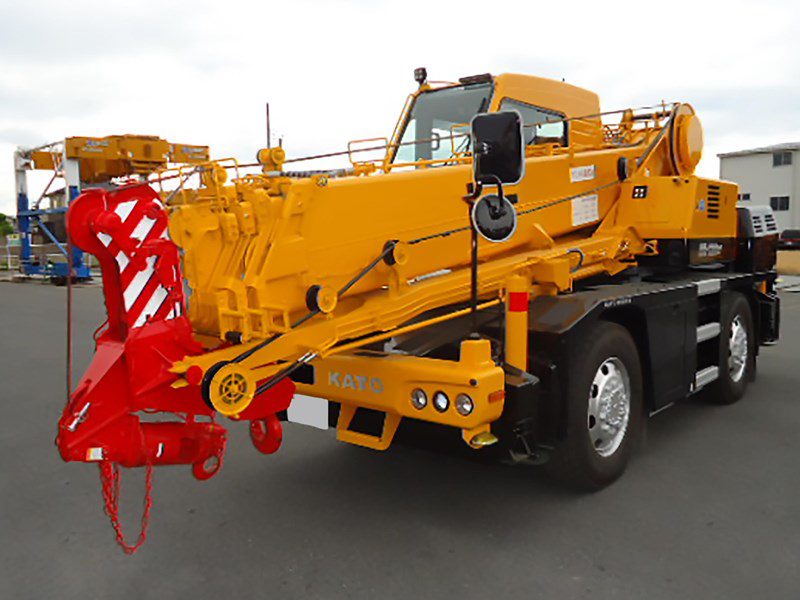
Mobile crane hire remains the quiet workhorse of Australian construction. Its value lies in flexibility—these cranes can be transported quickly, set up with relative ease, and deployed across a wide range of tasks. From lifting bridge segments in regional infrastructure projects to installing heavy equipment in industrial zones, mobile cranes provide the kind of responsiveness that large-scale, geographically dispersed projects require.
In a country as expansive as Australia, this mobility is indispensable. Infrastructure does not exist in a single concentrated corridor; it spans highways, rail networks, and energy systems that stretch across vast distances. Mobile cranes, in this sense, are enablers of connectivity, supporting the physical links that bind cities and regions together.
Yet their transient nature makes them less suited to the sustained demands of vertical construction in dense urban areas. For that, a different approach is needed.
The Vertical Imperative
Tower crane hire has become synonymous with the rise of Australia’s modern skyline. These cranes, fixed in place and often integrated into the structure they are helping to build, provide the height and reach required for high-rise developments. Their presence signals long-term projects—apartment towers, office buildings, mixed-use complexes—that define the vertical expansion of cities.
What makes tower cranes effective is their ability to operate continuously over extended periods, moving materials with a rhythm that matches the steady pace of construction. They are, in many ways, the backbone of urban densification.
But as cities grow more crowded, even tower cranes encounter limitations. Their long horizontal jibs require clear airspace, which can be difficult to secure in tightly packed neighborhoods. Oversailing adjacent properties—where a crane’s load passes over neighboring land—introduces legal, logistical, and safety challenges that are increasingly difficult to navigate.
This is where the evolution of crane technology becomes particularly relevant.
Precision Over Reach
Luffing crane hire represents a subtle but important shift in how construction adapts to density. Unlike traditional tower cranes, luffing cranes can raise and lower their jib, allowing operators to control the working radius with far greater precision. This capability makes them especially suited to confined sites where space is limited and surrounding structures are close.
The growing reliance on luffing crane hire northern Sydney projects illustrate this trend clearly. In this part of the city, development often takes place within established urban fabric—near existing homes, commercial buildings, and transport corridors. There is little room for error, and even less tolerance for disruption.
Luffing cranes address this constraint by operating within tighter boundaries. They reduce the need to swing loads over neighboring properties and allow construction to proceed with minimal intrusion into surrounding spaces. In doing so, they make it possible to build in locations that might otherwise be deemed too complex or risky.
This is not just a technical adjustment; it reflects a broader shift in urban philosophy. As cities prioritize livability alongside growth, the tools of construction must align with those values.
Safety in a Denser World
As crane operations become more intricate, safety has taken on greater prominence. Australia’s regulatory environment has evolved significantly, with stricter standards governing everything from operator certification to site planning and equipment maintenance.
Crane hire today involves a level of preparation that would have been unthinkable decades ago. Detailed lift plans, risk assessments, and coordination between multiple stakeholders are now standard practice. In dense urban environments, where cranes operate close to public spaces and occupied buildings, these measures are not just precautionary—they are essential.
The use of luffing crane hire northern Sydney developments increasingly depend on is often tied directly to these safety considerations. By limiting the crane’s operating radius, project teams can reduce exposure to potential hazards, creating a more controlled and predictable environment.
At the same time, technology is playing a growing role in risk management. Sensors monitor wind speeds and load weights in real time, while anti-collision systems help prevent interference between cranes on crowded sites. These tools do not replace human judgment, but they enhance it, providing operators with better information and greater confidence.
The Quiet Influence of Technology
From a distance, cranes may appear unchanged—steel structures performing familiar motions. Up close, however, they are becoming increasingly sophisticated. Digital systems now underpin many aspects of crane operation, from performance monitoring to maintenance scheduling.
Telematics allow fleet managers to track usage patterns and identify inefficiencies, while simulation software enables engineers to model crane movements before construction begins. This level of foresight is particularly valuable in complex urban projects, where a miscalculation can have costly consequences.
There is also a gradual shift toward automation. While fully autonomous cranes remain a future prospect, semi-automated features are already assisting operators with repetitive tasks, improving precision and reducing fatigue.
These advancements are not driven by novelty, but by necessity. As construction projects become more demanding—faster timelines, tighter budgets, higher expectations—technology offers a way to manage complexity without compromising safety or quality.
Economic Realities and Environmental Pressures
The rise of crane hire as a service model reflects broader changes in the construction industry. Owning cranes outright requires significant capital investment and ongoing maintenance, making it less attractive in a market characterized by fluctuating demand. Hiring equipment allows companies to remain agile, accessing the right tools for each project without long-term commitments.
Environmental considerations are also beginning to influence decision-making. While cranes are not the largest contributors to construction emissions, their operation still matters, particularly in urban areas where noise and air quality are closely monitored. Electric and hybrid cranes are gradually entering the market, offering quieter and cleaner alternatives.
This transition is slow, shaped by cost and infrastructure constraints, but it signals a growing awareness of sustainability within the industry. Crane hire, in this context, becomes part of a larger conversation about how construction can reduce its environmental impact.
The Human Element
For all the advances in technology, crane operations remain deeply human. Skilled operators, riggers, and engineers bring experience and intuition that machines cannot replicate. Their decisions—often made in real time—determine the success of each lift.
In Australia, the demand for skilled labor in this field continues to grow. Training programs and certification standards have become more rigorous, reflecting the increasing complexity of modern crane operations. This investment in human capital is as important as any technological innovation.
A Subtle Force Shaping Cities
It is tempting to think of cranes as temporary fixtures, present only for the duration of construction. But their influence extends far beyond the projects they serve. The availability and capability of crane hire shape what can be built, where it can be built, and how efficiently it can be delivered.
mobile crane hire supports the լայն spread of infrastructure across vast landscapes. Tower crane hire enables the vertical ambitions of modern cities. And luffing crane hire, particularly in dense areas like northern Sydney, makes it possible to build within the constraints of an already crowded urban environment.
Together, they form an invisible framework that underpins Australia’s evolving cities.
The next time you notice a crane against the skyline, it may seem like a simple piece of machinery. But look a little closer, and you’ll see something more: a reflection of the challenges and possibilities shaping urban life. In their quiet, methodical movements, cranes are doing more than assembling buildings. They are helping define how Australia grows—carefully, deliberately, and increasingly, within the limits of the space it already has.