Australia’s major cities are increasingly defined by vertical growth. As development pushes into already dense urban cores, construction projects face mounting constraints related to space, safety, and regulatory compliance. In this environment, the choice of lifting equipment is no longer a purely technical decision but a strategic one. Among the available options, luffing crane hire has emerged as a critical solution for inner-city projects where conventional crane configurations are impractical. At the same time, complementary lifting methods, including franna crane hire western sydney, continue to play a supporting role in managing ground-level logistics across constrained sites.
This blog examines when and why luffing crane hire is required for inner-city construction projects in Australia, analysing its strategic value, regulatory drivers, and relationship to broader urban development practices.
The Challenges of Inner-City Construction
Inner-city construction presents a unique combination of constraints. Sites are typically small, surrounded by existing buildings, and subject to strict planning controls. Oversailing neighbouring properties, managing noise, and maintaining public safety are persistent concerns. These factors limit the use of traditional hammerhead tower cranes, which rely on long horizontal jibs that swing freely through the airspace.
In Australian cities such as Sydney and Melbourne, planning authorities increasingly scrutinise crane movements as part of development approvals. Where airspace encroachment cannot be avoided, developers are often required to demonstrate mitigation measures. It is within this context that luffing crane hire becomes not only advantageous but, in many cases, essential.
What Distinguishes a Luffing Crane?
A luffing crane differs from a conventional tower crane in the way its jib operates. Instead of remaining fixed horizontally, the jib can be raised and lowered, allowing loads to be lifted closer to the mast and reducing the crane’s operating radius when required. This capability significantly limits oversailing and makes luffing cranes particularly suitable for confined urban sites.
From a strategic standpoint, luffing crane hire enables construction to proceed on sites that would otherwise be constrained by planning restrictions. The ability to control jib movement allows projects to comply with airspace limitations while still achieving the vertical reach required for high-rise construction.
Strategic Role of Luffing Crane Hire in Urban Development
Luffing crane hire plays a strategic role in supporting high-density urban development across Australia. As cities prioritise infill development and urban renewal, projects increasingly occupy narrow lots bounded by existing structures. In these settings, lifting capacity must be balanced against spatial control.
By reducing the crane’s horizontal footprint, luffing cranes allow developers to maximise buildable area on the ground while maintaining lifting efficiency above. This trade-off is particularly valuable in inner-city precincts, where land values are high and site utilisation directly affects project viability.
In practical terms, luffing crane hire supports taller buildings on smaller sites, aligning with broader urban planning objectives focused on density and proximity to transport and services.
Comparing Luffing Cranes with Other Lifting Approaches
The decision to use a luffing crane is often made in comparison with alternative lifting methods. Conventional tower cranes remain effective on sites with sufficient clearance, while mobile cranes offer flexibility for short-duration tasks. However, neither option fully addresses the constraints of tightly bounded inner-city developments.
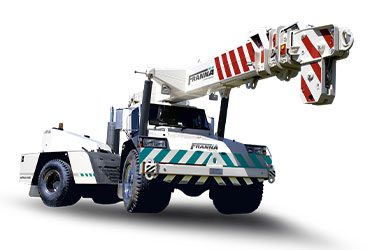
Luffing cranes provide continuous vertical lifting capacity over long project durations without the repeated mobilisation required by mobile cranes. This consistency reduces downtime and simplifies sequencing for high-rise construction. At ground level, mobile solutions still have a role. For example, franna crane hire western sydney is commonly used to reposition materials within sites or handle deliveries where rapid movement is required.
This layered approach reflects an industry practice of matching lifting technology to specific phases and constraints rather than relying on a single solution.
High-Rise and Mixed-Use Applications
Luffing crane hire is most closely associated with high-rise residential and commercial towers, but its relevance extends to mixed-use developments that combine residential, retail, and commercial functions. These projects often involve complex staging, with podium structures, transfer slabs, and varying building heights.
In such scenarios, the precision offered by luffing cranes allows for controlled lifting around partially completed structures. This is particularly important when building above existing podiums or integrating new construction with retained façades. The ability to adjust jib angles helps avoid clashes and supports safe operations throughout extended build programs.
Regulatory Drivers Behind Luffing Crane Adoption
Regulation is a significant factor influencing when luffing crane hire is required. Australian Standards such as AS 1418 and AS/NZS 2550 establish design and safe-use requirements for cranes, while state-based WorkSafe authorities oversee licensing, inspections, and operational compliance.
In inner-city areas, additional regulatory scrutiny applies. Local councils often impose conditions related to oversailing, working hours, and community impact. In some cases, planning approvals explicitly require luffing cranes to minimise airspace intrusion over neighbouring properties.
These regulatory drivers mean that the selection of a luffing crane is frequently determined during the planning approval stage rather than after construction has commenced. Early integration of crane strategy into development applications has become standard practice for complex urban projects.
Technology and Precision in Modern Luffing Cranes
Technological advancements have reinforced the suitability of luffing cranes for inner-city work. Modern systems incorporate advanced load monitoring, anti-collision technology, and automated controls that enhance precision. These features are particularly important on sites with multiple cranes or adjacent developments operating simultaneously.
Digital modelling tools allow crane operations to be simulated alongside building information models. This integration supports accurate planning of lift paths, jib movements, and load placements. In dense urban environments, such foresight reduces the risk of operational delays and safety incidents.
Technology has effectively shifted luffing crane operations from reactive management to proactive planning, aligning with broader trends in construction digitisation.
Workforce Skills and Operational Complexity
Operating luffing cranes requires specialised skills. Operators must manage not only load movement but also jib angle and radius in response to site conditions. In Australia, crane operators must hold high-risk work licences, and additional competencies are often required for complex inner-city sites.
The availability of skilled personnel can influence crane selection and scheduling. Inner-city projects tend to prioritise experienced operators who are familiar with constrained environments and regulatory expectations. This reliance on expertise underscores the importance of workforce planning alongside equipment selection.
MantiKore Cranes in the Inner-City Construction Context
MantiKore Cranes operates within Australia’s luffing crane hire landscape, supporting projects shaped by urban density, regulatory oversight, and technical complexity. In inner-city environments, the company’s work reflects the broader industry requirement for precise lifting solutions that align with planning controls and safety standards. By operating within established Australian Standards and WorkSafe frameworks, organisations such as MantiKore Cranes illustrate how luffing crane hire functions as an enabling component of modern urban construction rather than a discretionary choice.
Challenges and Future Outlook
Despite their advantages, luffing cranes are not without challenges. They are generally more complex to operate and can involve higher upfront costs than conventional tower cranes. Installation and dismantling also require careful planning, particularly in constrained sites.
However, as Australian cities continue to densify, the conditions that necessitate luffing crane hire are likely to become more common. Increased emphasis on infill development, heritage integration, and airspace management will continue to favour cranes that offer precision and control.
At the same time, ground-level support solutions, including franna crane hire western sydney, will remain important in managing site logistics and reducing congestion, reinforcing a multi-layered approach to lifting strategy.
Luffing Cranes as a Response to Urban Reality
Luffing crane hire is required when inner-city construction demands height without horizontal intrusion. It is a response to the realities of building in environments where space is limited, regulation is strict, and public impact must be carefully managed.
In modern Australian cities, luffing cranes have become a defining feature of complex urban projects. Their use reflects an industry adapting to the challenges of density, balancing efficiency with compliance, and precision with scale. As urban development continues to evolve, luffing crane hire will remain a key indicator of how construction responds to the constraints of the city itself.