Australia’s major cities are building upward rather than outward. Population growth, planning constraints, and the economic logic of density have transformed skylines across Sydney, Melbourne, and Brisbane. In this environment, the choice of lifting equipment has become a strategic consideration rather than a routine procurement decision. Among the most prominent responses to urban constraint is luffing crane hire, a specialist approach increasingly visible on tightly confined construction sites, including projects associated with city crane hire western sydney.
Understanding Luffing Cranes in the Urban Context
A luffing crane is a type of tower crane distinguished by its ability to raise and lower its jib, rather than relying solely on horizontal slewing. This movement allows the crane to operate within a smaller airspace envelope, reducing the risk of oversailing neighbouring properties or infrastructure. In dense urban areas, where multiple construction sites often operate in close proximity, this capability has become critical.
Unlike conventional hammerhead tower cranes, luffing cranes can adjust their working radius dynamically. This makes them particularly suitable for inner-city developments where site footprints are constrained by existing buildings, roads, and utilities. As Australian cities pursue higher-density zoning and mixed-use developments, the operational advantages of luffing crane hire are increasingly aligned with broader urban planning objectives.
Strategic Role in Modern Australian Construction
The strategic value of luffing cranes lies in their ability to unlock sites that might otherwise be considered unviable. In established suburbs and redevelopment corridors, developers face strict planning controls designed to minimise impacts on surrounding properties. Airspace management is a recurring concern, particularly in jurisdictions where property rights and safety regulations limit crane oversail.
Within this framework, luffing crane hire supports construction activity without requiring extensive concessions from regulators or neighbours. In areas such as Western Sydney, where large-scale residential and commercial projects are emerging alongside existing communities, city crane hire western sydney increasingly incorporates luffing cranes to balance development intensity with regulatory compliance. This approach reflects a broader industry shift toward equipment strategies that respond to social as well as technical constraints.
Comparing Luffing Cranes with Other Crane Types
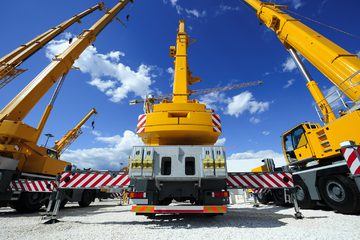
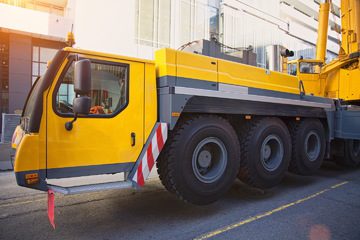
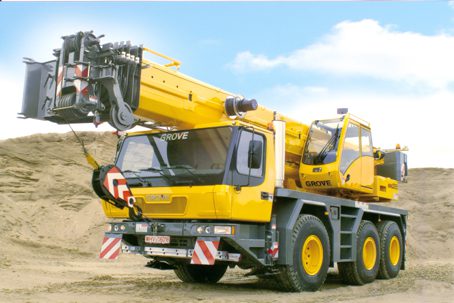
Luffing cranes occupy a distinct niche within the broader crane landscape. Traditional tower cranes offer high lifting capacities and efficient coverage for open sites, but their fixed jib radius can be problematic in dense environments. Mobile cranes provide flexibility and rapid deployment, yet they lack the sustained vertical reach required for high-rise construction.
In contrast, luffing cranes combine vertical capability with spatial control. Their reduced slewing radius allows multiple cranes to operate on adjacent sites with less risk of collision or interference. This makes them particularly suitable for precinct-scale developments where several buildings are constructed simultaneously. While their lifting speeds can be slower than those of hammerhead cranes, the trade-off is often justified by improved safety and regulatory acceptance.
Application Across High-Rise and Infrastructure Projects
High-rise residential and commercial towers remain the primary domain of luffing cranes. These projects require consistent material flow to upper levels, often over extended construction periods. The ability to lift heavy loads while maintaining tight control over jib movement is essential in these contexts.
Infrastructure projects present a more varied picture. While luffing cranes are less common in linear infrastructure works, they are increasingly used in transport-oriented developments, such as stations and mixed-use hubs, where construction occurs above or adjacent to live rail and road networks. In these settings, the precision offered by luffing crane hire aligns with the need to minimise disruption and manage complex interfaces.
Regulatory and Safety Frameworks in Australia
The use of luffing cranes in Australia is governed by a comprehensive regulatory framework designed to manage the risks associated with high-risk plant. Work health and safety legislation, administered by state and territory regulators such as SafeWork NSW and WorkSafe Victoria, places clear duties on designers, suppliers, and operators.
Australian Standards, including AS 2550 for crane safe use, set out requirements for planning, erection, and operation. These standards address issues such as wind loading, anti-collision systems, and exclusion zones, all of which are particularly relevant in dense urban environments. Compliance is not optional; it is integral to gaining approvals and maintaining operational continuity on constrained sites.
Licensing, Competency, and Operational Control
Operating a luffing crane requires specialised skills and licensing. High-risk work licences issued by Australian regulators specify crane classes and capacities, reflecting the complexity of these machines. Operators must be trained not only in mechanical operation but also in spatial awareness and communication, given the proximity of other cranes and structures.
Site management practices also differ. Lift planning for luffing cranes typically involves detailed coordination with other contractors and, in some cases, neighbouring developments. Anti-collision technology and shared airspace protocols are increasingly standard, particularly in precincts where multiple cranes operate concurrently. These measures underscore the collaborative dimension of modern urban construction.
Technological Advances Shaping Luffing Crane Use
Technological innovation has accelerated the adoption of luffing cranes in Australian cities. Modern systems incorporate advanced load monitoring, real-time wind measurement, and automated slewing limits. These features enhance safety and allow cranes to operate closer to their design limits without compromising control.
Digital modelling has also become central to crane planning. Building information modelling enables project teams to simulate crane movements and identify potential conflicts before construction begins. In dense areas associated with city crane hire western sydney, such simulations are often a prerequisite for planning approval, reflecting the growing integration of digital tools into regulatory processes.
Economic and Planning Considerations
From an economic perspective, luffing cranes represent a higher initial investment than some alternatives. Their installation and operation are complex, and their lifting speeds can be slower. However, these costs must be weighed against the risks of delays, regulatory non-compliance, and site inefficiency in dense urban settings.
Planning authorities increasingly view luffing cranes as enablers of orderly development. By reducing oversail and visual intrusion, they support community acceptance of high-density projects. This alignment between equipment choice and planning outcomes highlights how construction technology can influence broader urban policy objectives.
Industry Practice and Regional Variations
Industry adoption of luffing cranes varies across Australia. Inner-city Sydney and Melbourne have seen widespread uptake, driven by extreme site constraints and high land values. In contrast, outer suburban and regional areas continue to rely more heavily on conventional tower and mobile cranes, reflecting different spatial and economic conditions.
Western Sydney occupies a transitional position. Large-scale redevelopment, transport investment, and population growth have introduced density pressures previously associated with inner-city areas. As a result, city crane hire western sydney increasingly mirrors practices seen in established CBDs, including the strategic use of luffing cranes to manage airspace and community impact.
MantiKore Cranes in the Urban Construction Landscape
MantiKore Cranes and Urban Lifting Operations
MantiKore Cranes operates within this evolving construction environment, where luffing cranes are increasingly deployed on complex urban sites. Its involvement in projects requiring luffing crane hire reflects broader industry trends toward specialised lifting solutions in constrained settings. The company’s work illustrates how crane operators adapt to regulatory, spatial, and technological demands without altering the fundamental safety and compliance frameworks governing Australian construction.
A Tool Shaped by Urban Reality
Luffing cranes are not a universal solution, but their growing presence on Australian skylines speaks to the realities of contemporary urban development. As cities become denser and regulatory expectations more exacting, equipment that offers precision and control gains strategic importance. Luffing crane hire represents a response to these pressures, enabling construction to proceed within narrow physical and regulatory margins.
In this sense, the rise of luffing cranes reflects a broader shift in the construction sector. Success is increasingly defined not by brute capacity, but by the ability to operate intelligently within complex environments. For Australia’s urban centres, that shift is likely to remain a defining feature of development in the decades ahead.