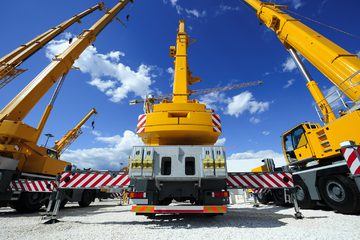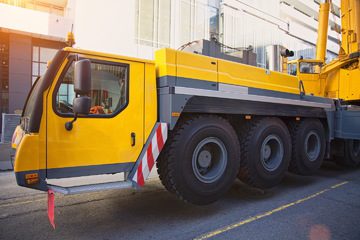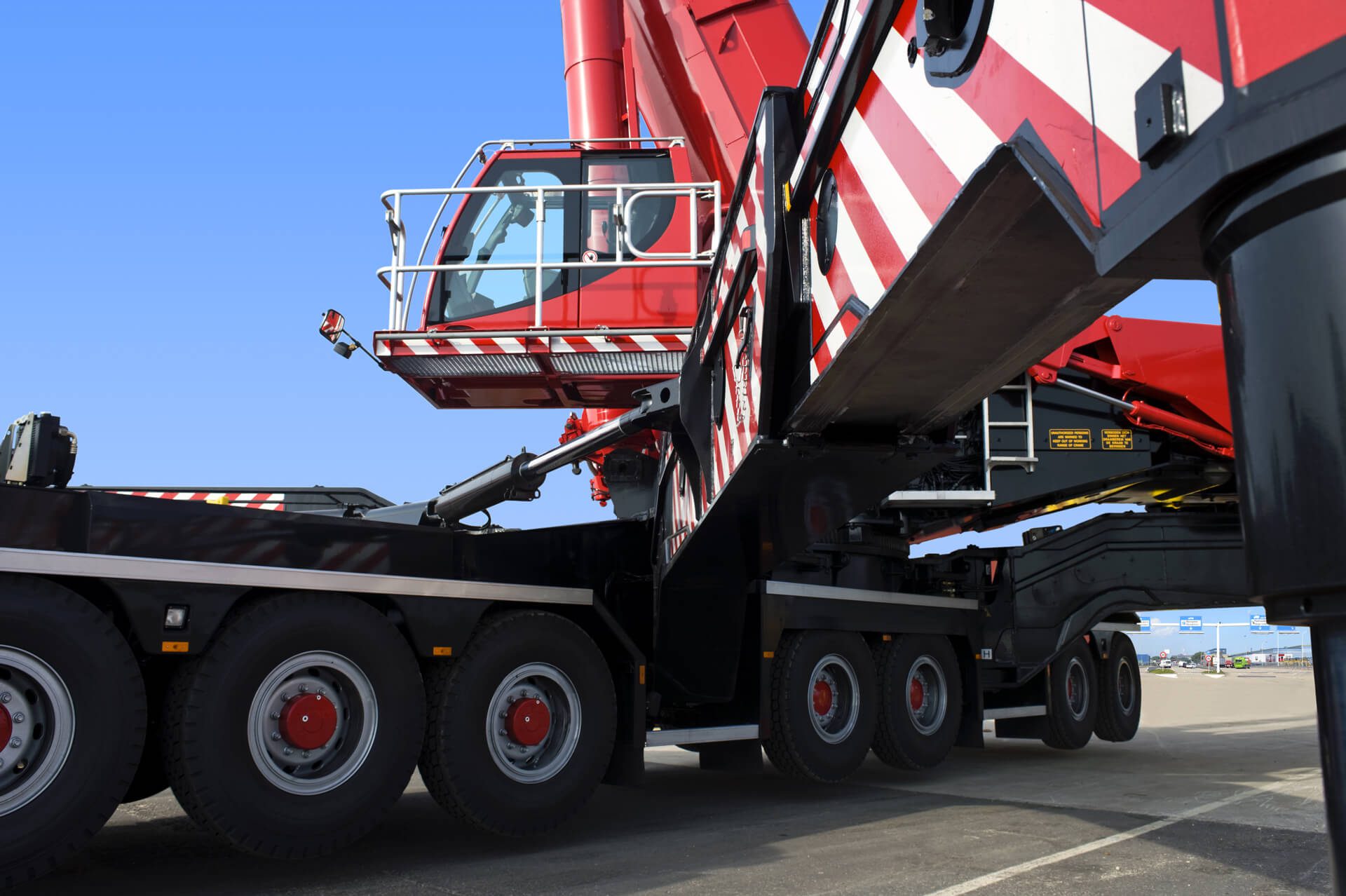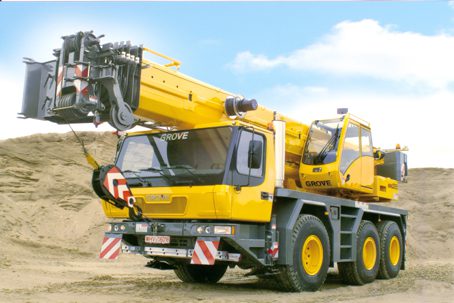
Australia’s largest cities are growing upward rather than outward. As urban land becomes scarcer and planning controls tighten around established neighbourhoods, construction projects increasingly operate within narrow footprints surrounded by existing buildings, roads, and public infrastructure. In this context, crane selection has become a strategic decision rather than a purely technical one. Luffing crane hire has emerged as a critical solution for dense city construction, particularly in environments where traditional crane configurations are constrained by limited airspace and proximity to neighbouring properties. Across metropolitan regions, including areas where tower crane hire western sydney supports large-scale development, luffing cranes are reshaping how complex urban projects are delivered.
Urban Density and the Challenge of Limited Construction Space
Modern Australian cities face a convergence of pressures that directly affect construction methodology. Population growth, urban consolidation policies, and the redevelopment of inner-city sites have reduced the availability of large, open construction zones. New projects are often inserted into tightly packed streetscapes, bounded by residential towers, commercial buildings, and transport corridors.
These conditions place significant constraints on crane operations. Traditional hammerhead tower cranes, with long horizontal jibs, can oversail neighbouring properties and public areas, raising regulatory, safety, and legal concerns. In response, developers and planners have increasingly turned to luffing cranes, which offer greater control over jib movement and airspace management. Luffing crane hire has therefore become closely associated with high-density urban construction, where spatial efficiency is paramount.
What Makes Luffing Cranes Different
Luffing cranes differ from conventional tower cranes primarily in how their jibs operate. Instead of remaining horizontal, a luffing crane’s jib can be raised and lowered, allowing loads to be lifted without extending far beyond the building footprint. This vertical articulation significantly reduces the crane’s slewing radius at height, which is critical in congested urban environments.
From a strategic perspective, this design allows construction to proceed on sites that would otherwise be unviable under current planning and safety constraints. The ability to control oversail reduces the need for complex airspace agreements and minimises risk to surrounding properties. As a result, luffing crane hire is often favoured for inner-city residential towers, mixed-use developments, and sites located adjacent to transport infrastructure.
Strategic Role in High-Rise and Mixed-Use Development
High-rise construction is one of the most common applications for luffing cranes in Australia. Tall residential and commercial buildings require sustained vertical lifting over long periods, often within footprints that occupy most of the site boundary. In these cases, the compact operating envelope of a luffing crane enables continuous material handling without breaching neighbouring airspace.
In mixed-use developments, where residential, retail, and commercial components are integrated within a single structure, construction sequencing is particularly complex. Luffing cranes support this complexity by allowing precise load placement at varying heights while maintaining strict control over horizontal reach. This capability aligns with the operational demands of contemporary urban projects, especially in metropolitan regions supported by tower crane hire western sydney, where multiple high-rise sites often operate in close proximity.
Comparison with Conventional Tower Cranes
While both crane types serve vertical construction, their suitability varies by context. Hammerhead tower cranes are typically more efficient for sites with ample space, offering faster cycle times and simpler operation. They are commonly used in suburban developments, large industrial sites, and infrastructure projects where oversail is not a concern.
Luffing cranes, by contrast, prioritise spatial control over speed. Their lifting cycles can be slower due to the additional jib movement required, but this trade-off is offset by their ability to operate safely in confined environments. The choice between luffing crane hire and conventional tower cranes is therefore a balance between efficiency and feasibility. In dense city centres, feasibility often outweighs marginal gains in speed.
Infrastructure Interfaces and Transport Corridors
Urban construction rarely occurs in isolation from existing infrastructure. Rail lines, motorways, and utility corridors frequently border development sites, particularly in inner-city renewal precincts. In these settings, crane operations must account for strict clearance requirements and operational constraints imposed by asset owners and regulators.
Luffing cranes offer advantages in these environments by reducing the risk of encroachment over live infrastructure. Their controlled jib movement allows lifting operations to be planned around rail possessions, road closures, and restricted zones. This capability is increasingly relevant in cities where transport-oriented development places new buildings directly adjacent to major infrastructure assets.
Safety Systems and Regulatory Expectations
Safety considerations are central to crane selection in Australia. Luffing cranes are subject to the same regulatory framework as other tower cranes, governed by state and territory Work Health and Safety laws and enforced by regulators such as SafeWork NSW and WorkSafe Victoria. These frameworks require duty holders to eliminate or minimise risks associated with crane operations.
Australian Standards, including AS 1418 for crane design and AS 2550 for safe use, underpin the technical requirements for luffing cranes. Load moment indicators, wind monitoring systems, and anti-collision technology are integral to their safe operation, particularly on sites with multiple cranes or restricted airspace.
Planning approvals also influence crane choice. Many local councils impose conditions that limit oversail or require cranes to remain within site boundaries wherever practicable. Luffing crane hire directly addresses these conditions, making compliance more straightforward and reducing the likelihood of disputes or delays.
Technological Innovation and Digital Planning
Advances in construction technology have reinforced the role of luffing cranes in city construction. Digital modelling tools allow crane operations to be simulated within building information models, enabling planners to assess clearances, clash risks, and lifting sequences before installation. This level of planning is essential on constrained sites, where minor miscalculations can have significant consequences.
Modern luffing cranes are increasingly integrated with data-driven safety systems that provide real-time feedback to operators and site managers. These systems enhance situational awareness and support compliance with regulatory requirements. In parallel, broader digitalisation across the construction sector has improved coordination between crane operations and other site activities, reducing congestion and improving overall efficiency.
Workforce Skills and Operational Complexity
Operating a luffing crane requires a high level of skill and experience. The additional control required to manage jib angle and load placement in confined spaces places greater demands on operators. Australian licensing requirements reflect this complexity, with tower crane operators required to hold high-risk work licences and demonstrate competency through formal assessment.
From an industry perspective, the availability of skilled operators influences the feasibility of luffing crane hire. As urban construction continues to intensify, workforce capability becomes an increasingly important factor in crane planning, alongside equipment availability and regulatory compliance.
Industry Perspective: MantiKore Cranes
Navigating Urban Constraints Through Crane Selection
Within the Australian construction landscape, companies such as MantiKore Cranes operate in an environment where urban constraints strongly influence equipment selection. The growing reliance on luffing crane hire reflects broader industry adaptation to dense city conditions, planning controls, and safety expectations. This shift underscores how crane technology and operational practices evolve in response to the spatial realities of modern urban development, particularly in regions where tower crane hire western sydney supports sustained high-rise growth.
The Broader Implications for Urban Development
The rise of luffing cranes highlights a broader transformation in how Australian cities are built. As construction sites become smaller and more complex, engineering solutions increasingly focus on minimising impact beyond site boundaries. Luffing crane hire exemplifies this approach, enabling vertical growth while respecting the physical and regulatory limits of dense urban environments.
At the same time, conventional tower cranes remain essential in less constrained settings, illustrating that no single solution fits all contexts. The coexistence of different crane technologies reflects the diversity of Australia’s construction sector, from inner-city towers to suburban and regional projects.
Conclusion
Luffing cranes have become a defining feature of contemporary city construction in Australia, offering a practical response to the challenges of limited space, regulatory oversight, and urban density. By enabling controlled lifting within tight airspace constraints, luffing crane hire supports the delivery of high-rise and mixed-use developments that would otherwise face significant obstacles. In metropolitan growth areas supported by tower crane hire western sydney, these cranes play a strategic role in shaping skylines while maintaining safety and compliance.
As Australian cities continue to densify, the importance of adaptable, space-efficient construction solutions will only increase. Luffing cranes, supported by evolving technology, regulation, and workforce skills, are likely to remain central to the future of urban construction.