Western Sydney is changing rapidly. New residential communities, industrial precincts, transport infrastructure and commercial developments are creating a construction environment where space, access and timing are becoming increasingly important. On many sites, the difficult part is not simply lifting a heavy component. It is getting the right equipment into position and keeping the lifting operation aligned with the wider construction schedule.
That is why all terrain crane hire western Sydney has become relevant to a broader discussion about how construction projects are being planned. Crane selection is no longer only a question of lifting capacity. Project teams must consider access routes, ground conditions, working radius, site congestion, safety requirements and the sequence in which different activities will take place.
The implications extend beyond individual projects. As Western Sydney becomes more densely developed, the machinery used on construction sites increasingly reflects the logistical pressures of a growing metropolitan region.
Western Sydney Is Making Crane Selection More Strategic
A construction site rarely operates in isolation. Deliveries arrive at scheduled times, subcontractors require access, excavation may continue alongside structural work, and neighbouring roads or properties can impose additional restrictions. A crane therefore has to fit into a wider operational environment.
This is particularly relevant in Western Sydney, where construction can take place across very different settings. A large industrial development may provide substantial working space, while a commercial or residential project can involve tighter access and greater interaction with surrounding activity. Infrastructure work may introduce another challenge, with lifting requirements changing as a project progresses from one location to another.
These conditions make equipment selection a planning decision. The appropriate crane is determined by the relationship between the load, the site and the work program rather than by capacity alone.
A machine with significant lifting capability may not necessarily be the most practical choice if its movement or positioning creates difficulties. Conversely, equipment that can travel efficiently and operate across changing conditions may provide greater flexibility when the project demands it.
Why All-Terrain Cranes Have a Distinct Role
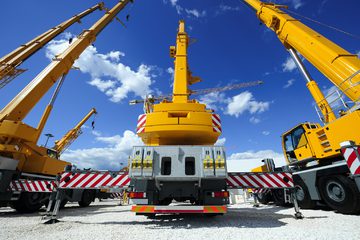
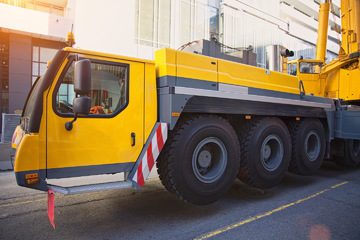
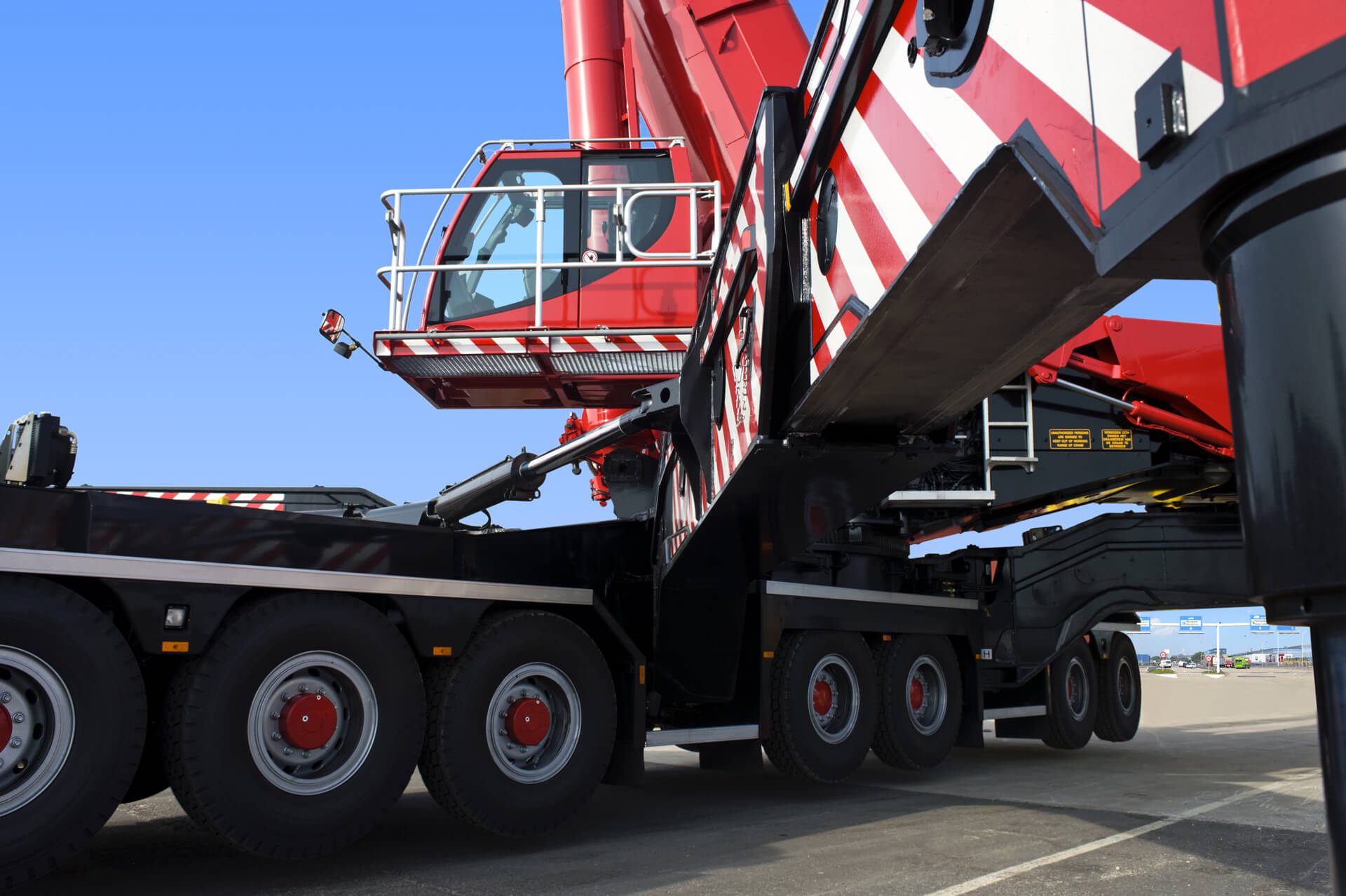
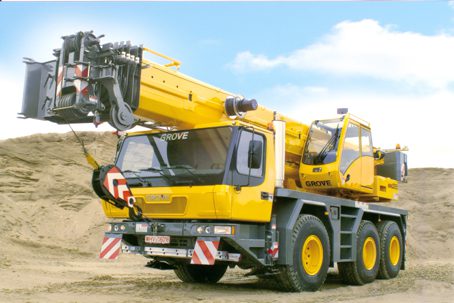
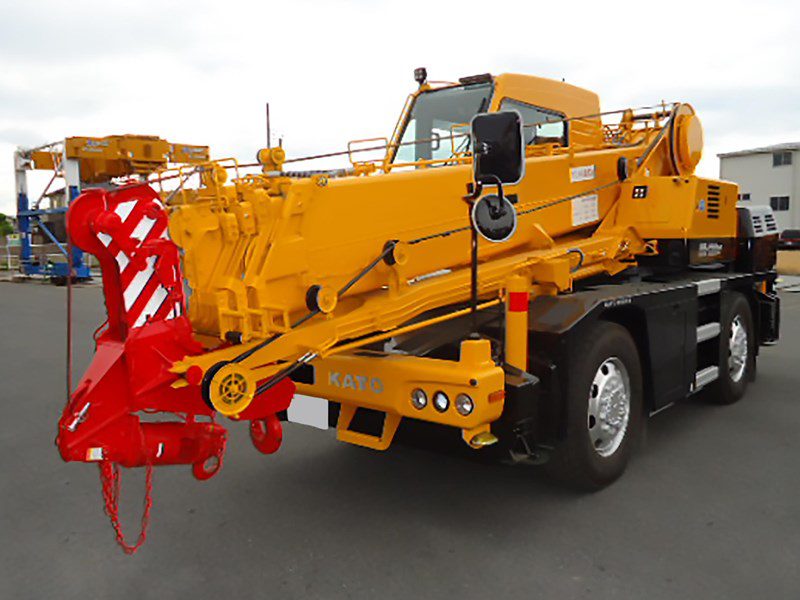
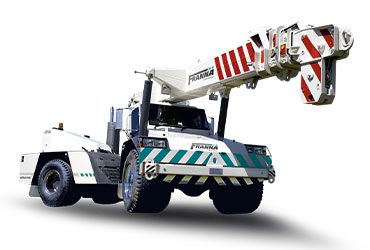
All-terrain cranes are designed around a combination of road mobility and the ability to operate in demanding site environments. That combination can be useful when a project requires equipment to move between locations while still undertaking substantial lifting work once positioned.
The distinction matters because construction sites are rarely static. Access routes can change as excavation progresses. Temporary structures can alter available space. Materials may need to be lifted from different positions at different stages of the build.
In such circumstances, mobility becomes part of the project’s productivity equation. The crane’s ability to reach a working position and reposition when necessary can influence how efficiently other trades operate around it.
This does not make all-terrain equipment automatically suitable for every project. Crane selection remains dependent on load characteristics, site conditions, lifting radius, ground preparation and the requirements of the particular operation. The important point is that its combination of mobility and lifting capability can address a specific set of construction constraints.
Different Cranes Solve Different Problems
The wider crane market illustrates why equipment should be selected according to project requirements rather than general assumptions.
Mobile crane hire can be useful where lifting operations require flexibility across multiple locations or where equipment needs to be repositioned during a project. Its value is closely connected to the ability to adapt to changing work areas.
Tower crane hire serves a different purpose. On large-scale vertical construction, a tower crane can remain positioned for extended periods and support repetitive lifting as structural work progresses upward. Its usefulness comes from sustained operation within a defined construction footprint.
Luffing crane hire addresses another type of constraint. In dense urban environments, the ability to control the crane’s working envelope can become particularly important when neighbouring buildings, roads or other construction operations limit available space.
These differences reinforce a broader principle: there is no universally appropriate crane. The decision depends on what the project is trying to accomplish and what physical constraints stand in the way.
Access Can Determine the Practical Choice
One of the most underestimated aspects of crane operations is access. A site may appear large enough once the crane is positioned, but getting the equipment there can involve a separate set of challenges.
Road width, turning areas, overhead restrictions, temporary barriers and surrounding traffic can all affect mobilisation. Once the crane reaches the site, ground conditions and available space can influence where it can safely operate.
For projects considering all terrain crane hire western Sydney, these issues need to be examined as part of the initial planning process. The equipment must be compatible with the route to the site as well as the lifting operation itself.
This is particularly significant in developing areas where construction activity may occur alongside established communities and busy transport corridors. A lifting operation can affect traffic management and neighbouring activities, meaning that planning extends beyond the boundary of the construction site.
Safety Is Becoming More Integrated With Project Planning
The evolution of crane operations is also closely connected to safety expectations. Australian construction projects operate within established workplace health and safety frameworks, making risk assessment and competent operation central to lifting activities.
Safety planning begins before the crane arrives. Project teams need to consider ground conditions, load characteristics, lifting zones, weather, exclusion areas and interactions between lifting equipment and other site activities.
This has changed the role of crane selection. Choosing equipment is increasingly part of the broader risk-management process rather than a separate procurement exercise.
Technology is contributing to that development. Digital monitoring, positioning systems and load-management tools can provide additional information about operating conditions and equipment performance. Such systems do not replace qualified personnel or careful planning, but they can improve visibility during complex operations.
The result is a construction environment in which physical equipment and digital information increasingly work together.
The Hidden Economics of Crane Hire
The cost of crane hire cannot be measured solely through an equipment rate. Mobilisation, transport, site preparation, operator requirements, traffic management and potential delays can all affect the economics of a lifting operation.
An unsuitable crane can introduce costs that are not immediately visible. Additional repositioning may disrupt other trades. Difficult access can complicate mobilisation. Equipment that is larger than necessary may create logistical challenges of its own.
This is why the most economical decision is not necessarily the machine with the lowest hire price. Nor is it automatically the largest or most capable crane.
The more useful approach is to consider total project fit. Equipment should correspond with the site’s physical conditions, the lifting requirements and the sequence of construction activities. When those factors align, crane operations can become easier to coordinate with the rest of the project.
For construction businesses operating under tighter schedules and cost pressures, that alignment can be significant.
Technology, Regulation and the Next Stage of Crane Operations
The crane hire industry is also being shaped by broader changes in Australian construction. Regulatory expectations continue to influence how lifting operations are planned, while technology is providing more detailed information about equipment and site conditions.
At the same time, construction companies are under pressure to manage resources efficiently. Labour availability, project acceleration and sustainability considerations all contribute to the need for more deliberate equipment planning.
These pressures suggest that the future of crane hire will not be defined by equipment specifications alone. The ability to integrate machinery into a complex project environment will become increasingly important.
Western Sydney provides a useful case study because its development brings many of these pressures together. The region’s construction activity requires equipment capable of working within changing physical and logistical conditions, while project teams must balance productivity with safety and regulatory responsibilities.
What Western Sydney Reveals About Australia’s Construction Future
The story of crane hire in Western Sydney is ultimately larger than the cranes themselves. It reflects how Australia’s construction industry is adapting to a more complex urban environment.
As development expands, construction sites are becoming more constrained by roads, neighbouring properties, infrastructure, schedules and competing activities. Equipment decisions therefore have consequences that reach beyond a single lifting operation.
For project managers and construction decision-makers, all terrain crane hire western Sydney represents one example of this broader shift toward fit-for-purpose planning. The question is increasingly not which crane is most powerful, but which equipment can work most effectively within the realities of the project.
That change is likely to become more pronounced as Australian cities continue to grow. The cranes may remain highly visible symbols of development, but the more consequential evolution is happening behind the scenes—in the planning, technology, safety systems and decisions that determine how those machines are used.