On any weekday morning in Sydney, cranes punctuate the skyline as consistently as commuter trains or ferries crossing the harbour. Yet while tower cranes dominate the horizon, much of the industry’s daily momentum depends on equipment that rarely attracts public attention. On constrained construction sites, beside active roads, inside industrial estates, and across infrastructure upgrades, compact lifting solutions are increasingly determining whether projects stay on schedule or fall behind.
This shift has elevated the strategic importance of franna crane hire Sydney, not because these cranes are larger or more visible than their counterparts, but because they answer a different question. As Australia’s largest cities become denser and construction timetables become less forgiving, flexibility has become almost as valuable as lifting capacity itself.
The evolution reflects a broader change within Australian construction. Crane selection is no longer viewed simply as a logistical exercise. It has become a procurement decision that influences safety outcomes, project sequencing, labour efficiency, and ultimately the pace at which cities continue to grow.
Why Crane Decisions Matter More Than Ever
Australia’s construction industry is navigating an unusual convergence of pressures. Population growth continues to drive demand for housing and infrastructure, while urban centres face increasingly limited construction space. At the same time, labour shortages, higher project costs, and stricter compliance expectations leave little room for operational inefficiency.
Sydney illustrates these challenges particularly well. New developments are often inserted into established neighbourhoods where traffic must continue flowing, nearby businesses remain open, and existing utilities restrict available working space. Construction teams are expected to deliver complex projects without significantly disrupting the surrounding environment.
Under these conditions, the question is no longer simply whether lifting equipment is available. It is whether the chosen crane matches the realities of the site.
That is one reason procurement strategies have become more sophisticated. Project managers increasingly assess equipment not only by lifting charts but also by mobility, setup time, accessibility, regulatory compliance, and the overall effect on construction sequencing.
Different Cranes for Different Urban Challenges
Every major project relies on lifting equipment, but each crane category solves a different operational challenge.
For projects spread across multiple locations, mobile crane hire provides versatility. Mobile cranes can travel efficiently between sites, perform varied lifting tasks, and minimise downtime between operations. Civil works, utility installations, and infrastructure maintenance frequently benefit from this flexibility because work locations change rapidly.
High-rise developments present a different set of requirements. Tower crane hire supports sustained lifting over extended construction periods, allowing materials to move vertically with consistency throughout months—or even years—of building activity. Their presence has become synonymous with Australia’s expanding urban skylines.
Yet neither solution fully addresses every scenario.
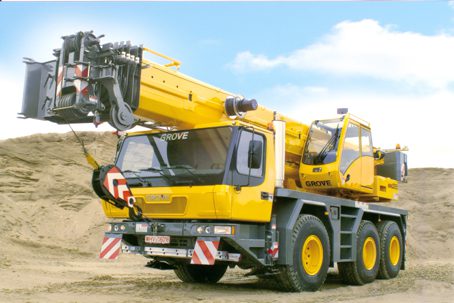
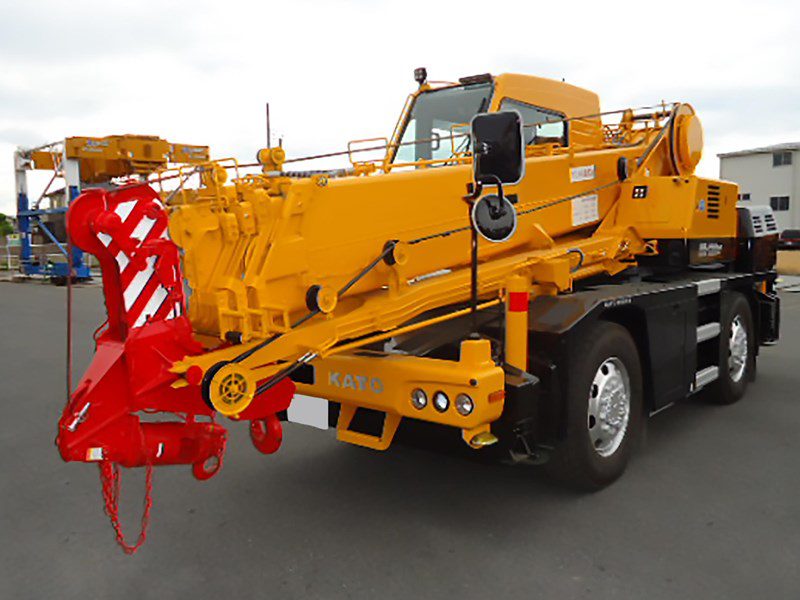
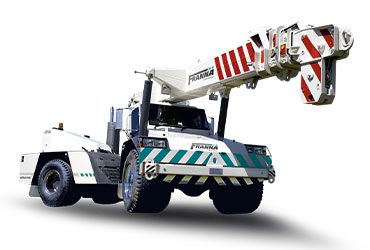
Within constrained commercial developments, industrial facilities, logistics centres, and active construction zones, Franna cranes occupy a distinct position. Their design combines lifting capability with exceptional mobility across prepared work sites, reducing the need for repeated transport and setup between nearby lifting tasks.
In practical terms, this makes franna crane hire Sydney particularly relevant for projects where materials must be relocated frequently across compact areas, where access is restricted, or where project timelines depend on rapid equipment repositioning rather than maximum lifting height.
Rather than replacing larger cranes, Franna cranes increasingly complement them, filling the operational gap between heavy lifting capacity and day-to-day construction efficiency.
Sydney’s Density Is Changing Equipment Strategy
Urban density changes more than architecture; it changes logistics.
Construction sites across metropolitan Sydney rarely enjoy generous operating space. Existing buildings, transport corridors, pedestrian access, underground services, and neighbouring developments all influence how lifting operations are planned.
This has encouraged contractors to prioritise equipment capable of adapting to changing site conditions rather than relying exclusively on maximum lifting specifications.
A commercial refurbishment in the central business district, for example, presents different challenges from a suburban warehouse expansion. Likewise, replacing mechanical equipment inside an operating industrial facility requires a different lifting strategy than installing structural steel on an open greenfield site.
In some cases, all-terrain crane hire Sydney provides the flexibility required when projects involve varied ground conditions or longer travel between locations. In others, compact Franna cranes reduce operational complexity because they can move efficiently around established worksites without requiring extensive mobilisation between lifts.
The distinction illustrates an important shift in procurement thinking. Increasingly, the most appropriate crane is not necessarily the largest one, but the one that aligns most closely with site constraints, programme requirements, and safety planning.
Regulation Has Raised the Stakes
Equipment selection has also become more significant because Australia’s regulatory environment continues to evolve.
State regulators, including WorkSafe authorities and SafeWork agencies, have strengthened expectations around lifting operations, operator competency, risk assessments, and site planning. Compliance now extends beyond simply using certified equipment. It encompasses planning methodologies, exclusion zones, maintenance documentation, and operator qualifications.
This evolution reflects broader industry priorities rather than isolated policy changes. As construction becomes more complex, regulators increasingly expect lifting operations to demonstrate careful preparation rather than reactive decision-making.
For contractors, this means crane hire decisions are intertwined with broader project governance.
Choosing equipment suited to site conditions helps reduce operational risk while simplifying compliance with increasingly detailed safety requirements. Conversely, selecting equipment poorly matched to project constraints can create unnecessary complexity throughout construction.
The result is an industry where procurement, engineering, and safety planning are becoming progressively more interconnected.
Technology Is Quietly Transforming Crane Operations
Technological change has reinforced this transformation.
Many lifting operations now incorporate digital load monitoring, GPS fleet management, maintenance tracking, and electronic documentation that improve operational visibility throughout the project lifecycle.
These technologies rarely attract public attention, yet they influence everyday construction decisions. Real-time equipment monitoring allows operators and project teams to schedule maintenance more effectively, reduce unexpected downtime, and improve overall utilisation across multiple sites.
Digital planning tools also support increasingly sophisticated lift planning before equipment even arrives on location. Site layouts, lifting paths, overhead hazards, and exclusion zones can be assessed with greater precision than was common only a decade ago.
Rather than replacing experienced operators, these systems increasingly support better decision-making, helping construction teams coordinate equipment within tighter schedules and more demanding urban environments.
A Different Way of Thinking About Infrastructure
Perhaps the most significant change is conceptual rather than technological.
Cranes were once viewed largely as individual pieces of equipment hired to complete isolated lifting tasks. Increasingly, they are understood as part of a wider infrastructure system connecting procurement, engineering, safety, scheduling, and urban development.
That perspective changes how construction leaders evaluate equipment choices.
A crane that reduces setup time may shorten project durations. Equipment that better suits constrained sites can minimise disruption to surrounding communities. More efficient lifting strategies may improve labour productivity during periods of workforce shortage.
These operational improvements may appear incremental individually, but across Australia’s expanding construction sector they influence project delivery at meaningful scale.
Looking Beyond the Skyline
The cranes visible above Sydney’s skyline tell only part of the city’s construction story. Equally important are the lifting decisions made at ground level, where equipment selection determines how efficiently projects progress through increasingly complex environments.
The growing relevance of franna crane hire Sydney reflects more than changing machinery preferences. It signals a construction industry adapting to denser cities, evolving regulation, tighter project schedules, and rising expectations around safety and operational precision.
As Australia’s urban landscape continues to evolve, crane hire will remain less about finding available equipment and more about selecting the right capability for increasingly demanding conditions. In that sense, the future of construction may depend as much on thoughtful procurement decisions as on the structures that eventually define the skyline.