Sydney’s skyline has become a visual record of Australia’s ambitions. Tower cranes stand above new residential precincts, transport hubs, hospitals, and commercial developments, marking projects that will shape the country’s cities for decades. Yet these towering machines tell a larger story than construction alone. They reflect how the industry is adapting to tighter urban environments, changing regulations, rising costs, and increasing expectations around safety and efficiency.
For many observers, cranes simply appear when a project begins and disappear when it ends. For developers, engineers, and infrastructure planners, however, the decision surrounding tower crane hire has become one of the earliest and most consequential choices in a project’s lifecycle. It is no longer a matter of securing lifting capacity. It is about aligning equipment with site constraints, project sequencing, workforce availability, and evolving regulatory requirements.
That shift has become particularly visible across Australia’s largest cities, where development must increasingly occur within dense, active urban environments rather than on open land.
Building More in Less Space
Australia continues to experience sustained demand for housing, transport infrastructure, healthcare facilities, and commercial redevelopment. Much of this investment is concentrated in metropolitan areas where available land is limited and construction sites operate alongside busy roads, rail corridors, and established communities.
These conditions create logistical challenges that extend well beyond engineering drawings. Every delivery, lift, and movement of material must be carefully coordinated to minimise disruption while maintaining strict safety standards. Construction schedules have also become less forgiving, with projects expected to meet tighter completion dates despite labour shortages and increasingly complex supply chains.
In this environment, equipment selection has become a strategic planning exercise rather than a procurement task completed after designs are finalised.
The conversation increasingly begins with understanding how lifting operations will influence every stage of construction.
Why Tower Cranes Remain Central to Urban Development
For long-duration developments, particularly high-rise residential and commercial buildings, tower crane hire remains fundamental to project efficiency. Unlike equipment designed for short-term mobility, tower cranes provide continuous lifting capability throughout months—or even years—of construction.
Their ability to repeatedly move structural steel, precast concrete panels, mechanical equipment, and finishing materials allows multiple trades to work simultaneously across different levels of a building. Rather than serving as isolated pieces of equipment, tower cranes become part of the site’s operating system, influencing productivity from foundation work through final fit-out.
As buildings continue to grow taller while construction footprints become smaller, these cranes also support vertical logistics that would otherwise become increasingly difficult. Their height and reach reduce unnecessary ground movements and help maintain organised workflows on constrained sites where every square metre carries operational value.
The result is not simply faster lifting but more predictable project coordination.
Different Projects Demand Different Solutions
Not every development requires the same lifting strategy, and the industry’s evolution reflects an increasing recognition that equipment must match project conditions rather than follow convention.
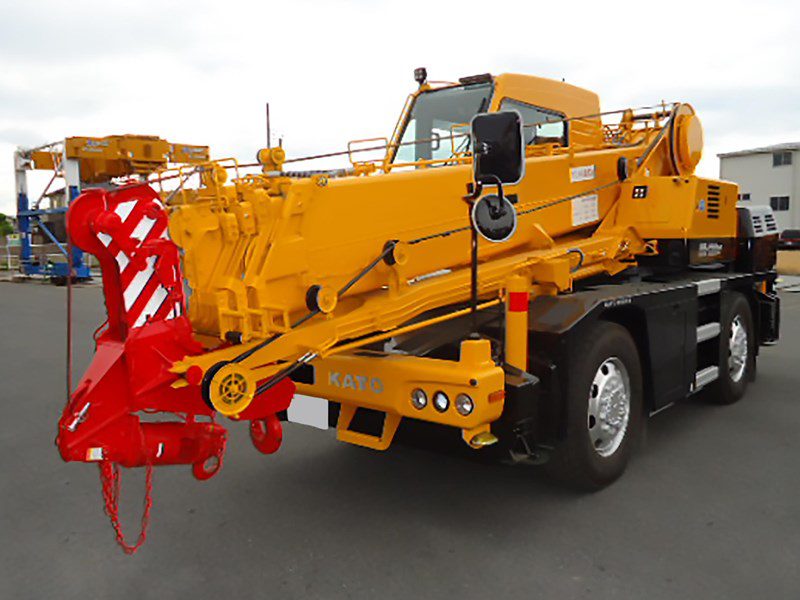
For infrastructure maintenance, bridge repairs, industrial shutdowns, or developments spread across multiple locations, mobile crane hire offers flexibility that permanent installations cannot match. The ability to reposition equipment quickly allows contractors to respond to changing work sequences without significant downtime.
Dense city-centre developments present a different challenge altogether. Where neighbouring buildings, narrow streets, or limited swing space restrict conventional operations, luffing crane hire has become an increasingly practical solution. Its reduced slewing radius allows materials to be lifted with greater precision while minimising interference with surrounding properties.
Sydney offers numerous examples of these spatial constraints. Inner-city residential towers, mixed-use developments, and transport upgrades frequently require equipment capable of operating safely within highly confined environments. In these situations, all-terrain crane hire Sydney may support initial site establishment, heavy component installation, or specialised lifting tasks before permanent tower cranes assume ongoing operations.
Rather than competing technologies, these crane types increasingly complement one another as projects become more sophisticated.
Regulation Has Changed the Conversation
Australia’s construction sector has experienced significant regulatory evolution over the past decade, particularly concerning workplace safety and risk management. Authorities such as WorkSafe and state workplace safety regulators have strengthened expectations around lift planning, operator competency, equipment inspection, and site-specific hazard management.
The industry’s response has extended beyond compliance.
Many operators now integrate digital inspection records, electronic maintenance tracking, and detailed lift planning into everyday operations. GPS positioning, load monitoring systems, and real-time performance data provide additional oversight that was far less common only a decade ago.
These developments reflect a broader shift in construction philosophy. Safety is no longer treated as a checkpoint before work begins but as an ongoing operational process supported by technology and continuous monitoring.
For project owners, this evolution provides greater confidence that lifting operations can be managed with higher levels of transparency and accountability throughout a project’s duration.
Technology Is Making Better Decisions Possible
Construction has traditionally relied heavily on experience, and experienced personnel remain indispensable. Yet today’s crane operations increasingly combine practical judgement with digital information.
Modern planning software enables teams to simulate crane locations before equipment arrives on site, reducing conflicts with neighbouring structures and identifying potential lifting constraints earlier in the design process. Building Information Modelling (BIM) allows lifting strategies to be coordinated alongside structural design, services installation, and project sequencing.
At the operational level, digital monitoring systems help identify equipment utilisation, maintenance requirements, and operational efficiency. Rather than reacting to issues after delays occur, project teams can anticipate challenges before they affect construction schedules.
This shift is particularly valuable as Australia’s construction workforce continues to face skills shortages. Better planning does not replace experienced operators, but it allows available expertise to be deployed more effectively across increasingly complex projects.
Sustainability Is Influencing Equipment Choices
Environmental considerations have also entered procurement discussions in ways that were uncommon only a few years ago.
Developers are increasingly evaluating equipment utilisation, fuel consumption, transportation efficiency, and overall project emissions alongside traditional measures such as cost and lifting capacity. While cranes themselves represent only one element of a development’s environmental footprint, their influence on logistics, material handling, and construction sequencing can affect broader sustainability outcomes.
Longer equipment utilisation, fewer unnecessary relocations, and more efficient lift planning all contribute to reducing operational waste. These considerations are becoming part of mainstream project evaluation rather than specialist environmental initiatives.
As environmental reporting expectations continue to grow, equipment decisions are likely to become even more closely connected to broader project performance metrics.
Looking Beyond the Skyline
Australia’s skylines will continue to evolve as cities respond to population growth, infrastructure investment, and changing patterns of urban living. Tower cranes will remain visible symbols of that transformation, but the more significant story lies beneath their steel frameworks.
The evolution of tower crane hire reflects a construction industry becoming more deliberate, more data-driven, and more responsive to the realities of modern urban development. Equipment selection now influences scheduling, workforce coordination, regulatory compliance, environmental performance, and long-term project outcomes in ways that extend well beyond lifting materials from one place to another.
For Australia’s infrastructure sector, the question is no longer simply whether a project needs a crane. It is whether the right lifting strategy has been integrated into the project from the very beginning. As cities become denser and construction challenges more complex, that decision is quietly becoming one of the defining factors behind successful urban development.