In any fast-growing city, there is a familiar visual rhythm: streets disrupted by hoardings, traffic rerouted, and above it all, cranes turning slowly against the sky. They are so common in places like Sydney that it is easy to stop noticing them. Yet to ignore them is to miss one of the most important forces shaping how modern Australian cities are actually being built.
Crane hire is often treated as a supporting service in construction—an operational detail rather than a defining feature. But that framing no longer holds. In an era of tightening urban space, rising construction complexity, and stricter safety expectations, cranes are no longer just lifting materials. They are shaping what can be built, where it can be built, and how quickly cities can evolve.
Nowhere is this more evident than in Sydney, where geography and density force construction into a constant negotiation with space itself.
The City That Builds Upward Before Outward
Urban growth in Australia has entered a distinctly vertical phase. In cities like Sydney, the limits of horizontal expansion—coastlines, heritage zones, and already-developed suburbs—have shifted construction upward. This has changed not only architecture, but also the machinery that makes it possible.
Sydney has become a kind of living laboratory for this transformation. Residential towers rise alongside transport upgrades, commercial redevelopments sit beside aging infrastructure being replaced or reinforced. The result is not a single construction boom, but a layered, continuous process of rebuilding and densification.
Within that environment, services such as city crane hire northern sydney are not simply logistical arrangements. They are responses to a fundamental constraint: there is very little room left to build without carefully managing the air above existing streets and structures.
Crane operations have therefore become less about raw lifting power and more about spatial intelligence—how to operate safely and efficiently in three dimensions, often in close proximity to other active projects.
Different Cranes, Different Urban Problems
To understand how crane hire shapes construction, it helps to think less in terms of equipment and more in terms of problem-solving. Each type of crane represents a different answer to a different kind of urban challenge.
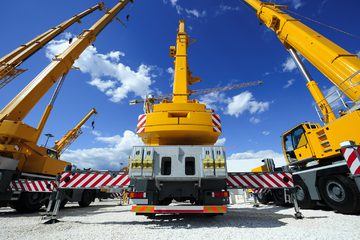
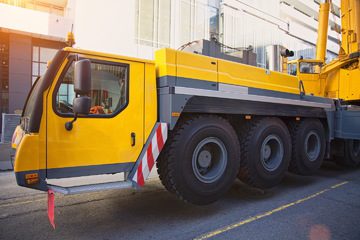
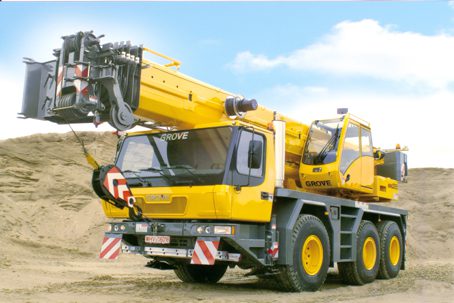
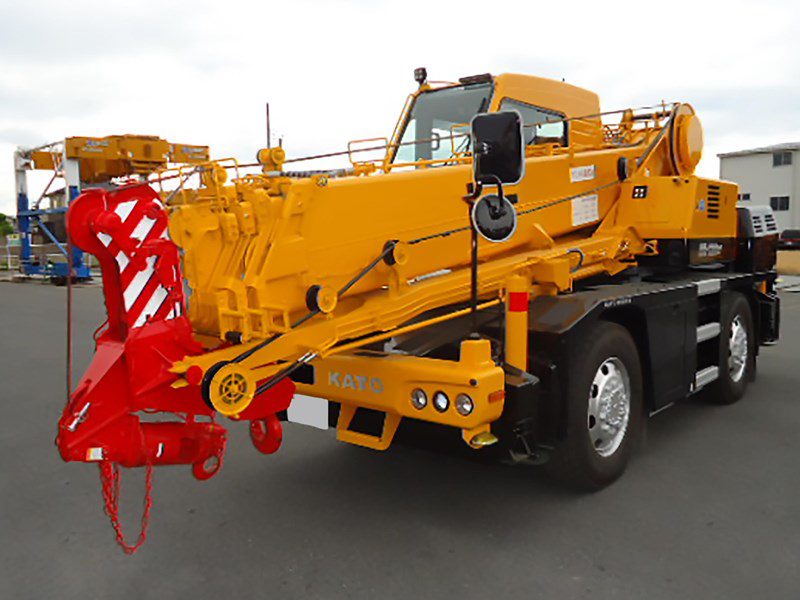
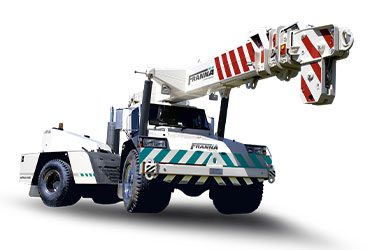
The most flexible option, mobile crane hire, is often used when speed and adaptability matter most. These cranes can be deployed quickly, moved between sites, and used for a wide range of lifting tasks without requiring permanent installation. In infrastructure projects—road upgrades, bridge works, and utility maintenance—they are often the first tool on site. Their value lies in mobility, not permanence.
By contrast, tower crane hire represents the opposite end of the spectrum. These cranes are designed to stay. Anchored into foundations or integrated into building cores, they become part of the construction itself. In high-rise developments, they are indispensable. Without them, vertical construction in dense urban environments would be significantly slower, and in many cases impractical.
Then there is luffing crane hire, which has grown increasingly important as cities become more congested. Unlike traditional tower cranes, luffing cranes are designed to operate in confined airspace. Their ability to raise and lower the jib reduces the risk of collision with nearby structures, making them particularly useful in tight urban blocks where multiple developments are occurring side by side.
Together, these three crane types form a kind of hidden infrastructure language. The choice between them reflects not just engineering preference, but the physical constraints of the city itself.
Building in Northern Sydney: Density as a Design Constraint
The pressures of urban construction are especially visible in parts of northern Sydney, where redevelopment and infill projects are reshaping established neighbourhoods.
In this context, city crane hire northern sydney reflects a broader shift in how construction is planned and executed. It is no longer enough to simply place a crane on a site. Its position, movement range, and interaction with surrounding airspace must be carefully negotiated from the earliest planning stages.
This is particularly true in areas where residential towers, transport infrastructure, and commercial developments are occurring simultaneously. Crane placement can affect not only the efficiency of a single project, but also the viability of neighbouring sites. A poorly positioned crane can restrict airspace, delay adjacent builds, or require costly redesigns.
The result is a construction environment where coordination is as important as capability. Crane use becomes part of a wider urban choreography, in which multiple projects share a limited vertical environment without interfering with one another.
Safety as an Evolving Standard, Not a Fixed Rule
If cranes define how cities are built, safety defines how they are allowed to be built.
Australia’s construction sector operates under a strict regulatory framework that has evolved in response to both technological change and hard-learned experience. Crane operations are governed by licensing requirements, engineering standards, and detailed risk management protocols that leave little room for improvisation.
But what is often overlooked is how dynamic these safety systems have become. Modern crane operations are not just regulated; they are continuously assessed in real time. Wind speed, load weight, ground stability, and swing radius are all monitored as part of ongoing operational control.
In dense urban environments, safety is no longer just about preventing isolated incidents. It is about managing interaction—between cranes, between sites, and between construction activity and public space.
As projects grow closer together and build heights increase, the margin for error narrows. This has led to more sophisticated planning processes, including coordinated lift schedules across multiple contractors and detailed modelling of crane movements before work even begins.
Technology Quietly Reshaping Construction Practice
While cranes themselves remain physically imposing and mechanically traditional, the systems surrounding them are undergoing a quiet transformation.
Digital modelling has become a standard part of planning for complex projects. Before a crane is installed, its position and movement range are often simulated in 3D environments to identify potential conflicts with nearby structures or other cranes. This reduces uncertainty and allows for more precise coordination.
On site, sensor technology now plays a growing role. Load monitoring systems, wind detection tools, and structural stress indicators provide real-time feedback to operators and site managers. This data-driven approach has shifted crane operation from a purely manual task to a more integrated decision-making process.
There is also a gradual move toward remote-assisted operation. While full automation remains limited in construction due to environmental unpredictability, certain functions are increasingly supported by digital systems that enhance precision and reduce risk.
These developments are not replacing human operators. Rather, they are expanding the information available to them, allowing for more informed and controlled lifting decisions in increasingly complex environments.
The Changing Meaning of Crane Hire
Taken together, these shifts suggest that crane hire in Australia is no longer just a service industry supporting construction. It is becoming a central part of how cities are designed and built.
The distinction between mobile crane hire, tower crane hire, and luffing crane hire is not merely technical. It reflects different ways of engaging with urban space—temporary versus permanent, flexible versus fixed, open versus constrained.
As cities like Sydney continue to grow vertically and inwardly, cranes will remain essential not only for what they lift, but for what they make possible. They determine the tempo of construction, the boundaries of safety, and the spatial logic of entire city blocks.
In that sense, the cranes above Australian cities are not just tools of construction. They are instruments of urban negotiation—quietly shaping how modern life is built, one lift at a time.