Across Australia’s rapidly evolving urban skyline, a quiet transformation is reshaping how developers, contractors, and infrastructure planners approach the most fundamental question in construction: how to build faster without compromising safety or quality. At the centre of this shift lies a decision that can determine whether a project meets its deadline or bleeds capital through costly delays. The choice between purchasing heavy lifting equipment outright and opting for tower crane hire has become one of the most consequential strategic calculations in modern Australian construction.
The premise seems straightforward. Hiring equipment rather than buying it should reduce upfront capital expenditure and transfer maintenance responsibilities to specialist providers. Yet the relationship between crane procurement strategies and project timelines proves far more nuanced than simple financial arithmetic might suggest. Industry data, regulatory frameworks, and on-the-ground realities reveal a complex picture that demands careful analysis.
How Tower Crane Hire Shapes Modern Project Timelines
The Australian construction sector has witnessed a pronounced shift toward equipment rental models over the past decade, driven by factors ranging from volatile project pipelines to increasingly sophisticated machinery requirements. Tower crane hire has emerged as a particularly significant element of this transition, given the substantial capital costs associated with purchasing, maintaining, and eventually disposing of these massive machines.
A standard tower crane suitable for mid-rise residential development can cost upwards of two million dollars to purchase outright. When projects face uncertain approval timelines or financing contingencies, committing such capital before ground is broken represents substantial risk. Hire arrangements allow contractors to align equipment costs precisely with project phases, deploying cranes only when vertical construction demands their presence and returning them when structures reach completion.
This financial flexibility translates directly to scheduling advantages in ways that extend beyond simple cash flow management. Construction firms operating under hire arrangements can access newer equipment with advanced safety features, higher lifting capacities, and more efficient operational characteristics than aging owned fleets might provide. The productivity gains from operating current-generation machinery compound across thousands of individual lifts throughout a project’s duration.
Regional Dynamics and Urban Density Challenges
The strategic importance of crane procurement varies significantly across Australia’s diverse construction markets. In established metropolitan centres, where land costs and development pressures create powerful incentives for vertical density, tower crane operations represent critical path activities that determine overall project tempo. Delays in crane availability or performance translate immediately into schedule slippage affecting subsequent trades and occupancy timelines.
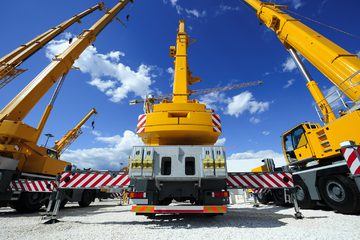
This pressure manifests with particular intensity in Sydney’s northern corridors, where residential and commercial development continues despite broader market fluctuations. Tower crane hire northern Sydney contractors report consistently strong demand, reflecting the region’s combination of transport infrastructure investment, population growth, and planning frameworks that encourage medium and high-density development. The availability of hire equipment calibrated to specific site constraints, from compact self-erecting units suitable for constrained lots to heavy-duty hammerhead configurations for major commercial towers, allows projects to proceed with machinery precisely matched to their requirements.
The alternative approach of maintaining owned crane fleets creates different strategic considerations. Large tier-one contractors with predictable project pipelines across multiple simultaneous developments may achieve cost efficiencies through ownership, spreading capital costs across numerous deployments. However, even these organisations increasingly supplement owned equipment with hired units to address peak demand periods or access specialised configurations their permanent fleets cannot provide.
Safety Standards and Regulatory Compliance
Australian workplace safety authorities maintain rigorous oversight of tower crane operations, creating compliance frameworks that influence equipment selection and deployment decisions. Safe Work Australia and state-based regulators including SafeWork NSW enforce requirements derived from the Work Health and Safety Act and associated regulations, establishing clear obligations for crane owners, operators, and the contractors engaging their services.
The Australian Standards framework, particularly AS 1418 covering cranes and hoists, establishes technical specifications for equipment design, manufacture, and operation. These standards interact with licensing requirements under the national high-risk work licence system, which mandates specific credentials for crane operators based on equipment class and lifting capacity. Workers operating tower cranes must hold CT class licences, while riggers, doggers, and other personnel involved in lifting operations require their own appropriate credentials.
For construction firms, these regulatory requirements create meaningful distinctions between ownership and hire arrangements. Companies owning crane fleets bear direct responsibility for ongoing compliance, including regular inspections, maintenance documentation, and eventual decommissioning when equipment reaches the end of its safe operational life. Under tower crane hire arrangements, these obligations typically remain with the hire company, which maintains equipment to required standards and provides current compliance documentation as a condition of rental agreements.
This transfer of compliance responsibility proves particularly valuable given the technical complexity of modern crane maintenance. Contemporary tower cranes incorporate sophisticated electronic control systems, structural monitoring sensors, and anti-collision technologies that require specialised expertise to service properly. Hire companies maintaining large fleets can invest in the technical capabilities and qualified personnel necessary for comprehensive maintenance programs in ways that would prove inefficient for contractors operating only occasional crane deployments.
Technological Advancement and Productivity Gains
The crane industry has not remained static while Australia’s construction sector evolved. Manufacturers have introduced successive generations of equipment incorporating technological improvements that enhance both safety and productivity. Load moment indicators have grown more sophisticated, providing operators with real-time feedback on lifting parameters and automatic limiting functions that prevent dangerous overload conditions. Anti-collision systems allow multiple cranes to operate within overlapping swing radii, critical capability on constrained urban sites where several towers may share limited airspace.
These technological advances filter through to Australian construction sites more rapidly under hire models than ownership arrangements typically allow. Hire companies competing for contractor business face commercial pressure to maintain modern fleets, retiring older equipment as it becomes technologically obsolescent even when it remains structurally sound. Construction firms engaging tower crane hire northern Sydney specialists can access current-generation equipment without bearing the depreciation costs associated with ownership through upgrade cycles.
The productivity implications extend beyond the cranes themselves to the data systems increasingly integrated with their operation. Telematics platforms tracking crane utilisation, cycle times, and operational patterns generate information that allows project managers to optimise lifting schedules, identify bottlenecks, and coordinate crane movements with material deliveries. These capabilities support the broader industry movement toward data-driven construction management, where decisions previously based on experience and intuition increasingly incorporate quantitative analysis.
The Verdict on Accelerated Completion
Returning to the central question of whether tower crane hire genuinely accelerates project completion requires acknowledging that no single equipment procurement strategy guarantees schedule success. The most sophisticated crane in the industry cannot compensate for poor planning, inadequate coordination, or insufficient skilled labour. Nevertheless, the evidence suggests that hire arrangements provide construction firms with meaningful advantages that can contribute to faster, more predictable project delivery.
The flexibility to deploy precisely matched equipment, access current technology, transfer compliance obligations, and align costs with project phases creates conditions favourable to efficient vertical construction. For the majority of Australian construction firms, particularly those operating in competitive urban markets where schedule certainty carries premium value, tower crane hire represents not merely a financial convenience but a strategic capability that supports their ability to deliver projects on time. The cranes rising above Sydney, Melbourne, Brisbane, and beyond increasingly carry the markings of hire fleets, testament to an industry that has largely answered this question through accumulated operational experience.