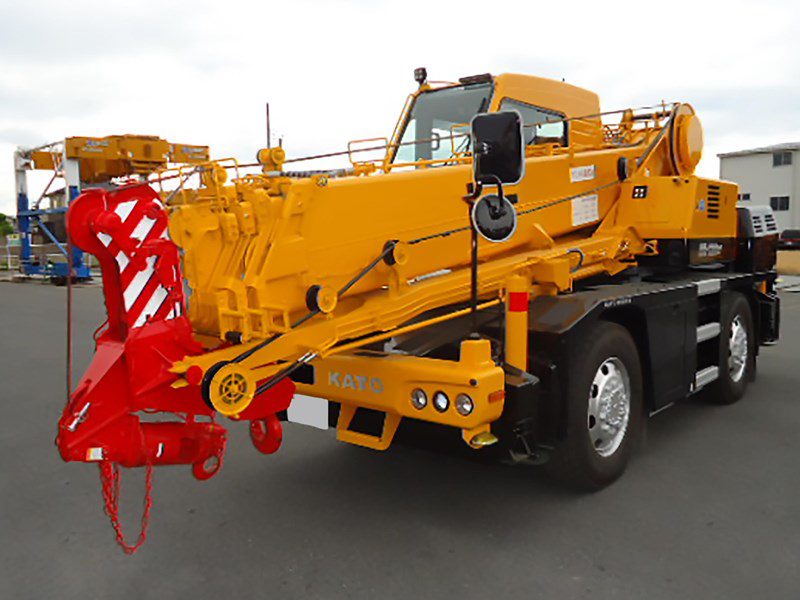
The skyline of modern Australia tells a story of engineering ambition meeting urban constraint. From the densely packed corridors of Sydney’s northern suburbs to the sprawling infrastructure projects reshaping Melbourne’s outer rings, construction teams are confronting a fundamental question: how do you build upward and outward when space, time, and safety margins continue to shrink?
The answer, increasingly, lies in the strategic deployment of precision lifting solutions. Mobile crane hire has emerged as a critical enabler of complex construction projects, offering flexibility and technical capability that fixed installations cannot match. As Australian cities grow denser and infrastructure demands intensify, the role of these machines in solving previously intractable engineering challenges has become impossible to ignore.
The Strategic Imperative of Flexible Lifting Solutions
Australia’s construction sector contributed approximately 175 billion dollars to the national economy in the 2023 financial year, according to the Australian Bureau of Statistics. Within this vast ecosystem, the ability to position heavy lifting equipment precisely where and when it is needed has become a competitive differentiator.
Mobile crane hire provides project managers with access to specialised machinery without the capital burden of ownership. More significantly, it allows engineering teams to match equipment specifications to specific project phases, site conditions, and lifting requirements. A residential tower in Chatswood demands different capabilities than a bridge replacement in Newcastle, and the hire model enables this precision matching.
The northern Sydney corridor exemplifies the pressures facing modern construction. Residential density is increasing, transport infrastructure is expanding, and commercial development continues despite constrained site access. City crane hire northern Sydney operations have adapted to these conditions, developing expertise in deploying equipment through narrow streets, beneath power lines, and adjacent to occupied buildings.
This regional specialisation reflects a broader industry trend. Rather than treating lifting as a commodity service, leading operators have developed deep knowledge of local conditions, regulatory environments, and engineering requirements. The result is a more sophisticated approach to what was once considered straightforward equipment provision.
Technical Precision in Constrained Urban Environments
The engineering challenges facing Australian construction have grown markedly more complex over the past two decades. Inner-city sites that once accommodated tower cranes now require solutions that can be mobilised and demobilised within hours rather than days. Heritage overlays restrict boom heights. Neighbouring properties demand vibration and noise controls that eliminate certain equipment categories entirely.
Mobile crane hire addresses these constraints through several technical advantages. Modern hydraulic systems enable precise load control that was impossible with earlier mechanical designs. Telescopic booms can be configured to specific reach and height requirements, avoiding the fixed geometry of tower alternatives. Computer-assisted load management provides real-time feedback to operators, reducing the margin for human error in complex lifts.
The technology has advanced considerably in recent years. Telematics systems now enable remote monitoring of equipment performance, maintenance requirements, and operational parameters. Some operators have integrated augmented reality systems that allow lift planning to be visualised before equipment arrives on site. These innovations reduce setup time, improve safety outcomes, and enable more ambitious engineering solutions.
City crane hire northern Sydney providers have been particularly active in adopting these technologies. The region’s combination of harbour-side topography, established infrastructure, and high property values creates an environment where precision is not optional. A miscalculated lift in Cremorne or Mosman can result in damage to neighbouring properties worth millions of dollars, making technological investment a matter of risk management as much as operational efficiency.
Regulatory Frameworks and Safety Compliance
The Australian construction industry operates within one of the world’s more rigorous safety regulatory environments. Safe Work Australia establishes national policy frameworks, while state-based regulators such as SafeWork NSW maintain oversight of specific operations. For lifting operations, the relevant standards include AS 2550 covering cranes, hoists, and winches, along with AS 1418 addressing crane design and construction requirements.
Mobile crane hire operators must navigate this regulatory landscape while maintaining commercial viability. High-capacity crane operation requires specific licensing under the national high-risk work licensing framework. Operators must hold the appropriate HRW licence class, with requirements scaling according to crane capacity. Riggers and doggers involved in lifting operations face their own certification requirements.
Beyond individual licensing, the regulatory framework addresses equipment inspection, maintenance documentation, and lift planning procedures. WorkSafe authorities can and do prosecute operators who fail to maintain adequate records or who proceed with lifts that have not been properly planned and documented. The penalties for non-compliance can include significant fines and, in cases involving serious harm, criminal prosecution of individuals.
This regulatory environment has shaped the structure of the mobile crane hire industry. Operators who invest in compliance systems, training programs, and documentation processes have developed competitive advantages over those who treat regulatory requirements as obstacles. The cost of proper compliance is substantial, but it has become a baseline expectation for projects involving tier-one builders and major infrastructure clients.
Infrastructure Applications and Engineering Integration
The infrastructure pipeline facing Australian governments at all levels represents the largest public works program in the nation’s history. Transport projects alone encompass rail extensions, motorway upgrades, port expansions, and airport developments worth hundreds of billions of dollars across the coming decade.
Mobile crane hire plays a distinctive role within these projects. Unlike building construction, where a single tower crane may serve an entire development from excavation to completion, infrastructure work typically involves sequential activities across extended geographical footprints. A bridge project may require heavy lifts at multiple locations over several months, with equipment needs varying from segment placement to barrier installation to sign gantry erection.
The hire model enables project managers to bring specific equipment to specific locations as work progresses, avoiding the inefficiency of maintaining underutilised machinery on site. For projects crossing local government boundaries or involving multiple prime contractors, this flexibility becomes essential to coordination and scheduling.
Engineering teams have increasingly integrated mobile crane hire planning into project design phases rather than treating it as a construction-stage consideration. Understanding what equipment can access a site, what ground bearing capacities are required for crane outriggers, and what lift geometries are achievable with available machines now influences design decisions. This integration reduces the risk of discovering during construction that designed elements cannot be practically installed.
Industry Evolution and Future Trajectories
The mobile crane hire sector in Australia has consolidated considerably over the past fifteen years. Smaller operators have merged or been acquired, while larger players have invested in fleet modernisation and geographic expansion. This consolidation has produced mixed outcomes. Customers benefit from improved equipment quality and broader service coverage, but reduced competition in some markets has affected pricing dynamics.
Environmental considerations are beginning to influence equipment selection and operational practices. Hybrid power systems are appearing in newer crane models, reducing fuel consumption and noise emissions. Electric auxiliary systems decrease idle-time diesel use. These developments respond to both regulatory pressure and client sustainability requirements, particularly for projects seeking Green Star or similar environmental ratings.
The workforce challenges facing the sector mirror those across Australian construction. Skilled operators are in short supply, and the ageing demographic of the existing workforce creates succession concerns. Training pipelines have struggled to match demand, despite industry efforts to promote crane operation as a career pathway. This labour constraint influences equipment availability and pricing, particularly for complex lifts requiring the most experienced operators.
Looking ahead, the intersection of data analytics, autonomous systems, and traditional lifting operations promises further evolution. While fully autonomous crane operation remains distant, incremental automation of specific functions is already occurring. Load sensing, anti-collision systems, and operator assistance technologies continue to improve safety outcomes while enabling less experienced operators to perform more complex work under appropriate supervision.
Conclusion
The question of how precision mobile crane hire solves complex engineering challenges admits no simple answer. The solution lies not in any single technological capability or operational practice but in the accumulation of expertise, investment, regulatory compliance, and technical precision that characterises the sector’s leading operators.
For Australian construction and infrastructure development, mobile crane hire has become infrastructure in its own right, an enabling capability without which the ambitions of urban planners, transport authorities, and property developers would remain unrealised. As cities grow denser and projects grow more complex, the strategic importance of this capability will only increase.