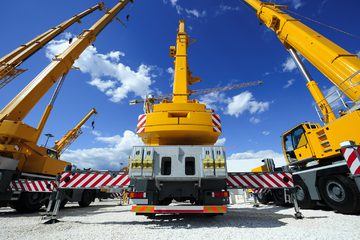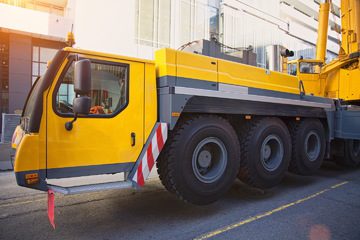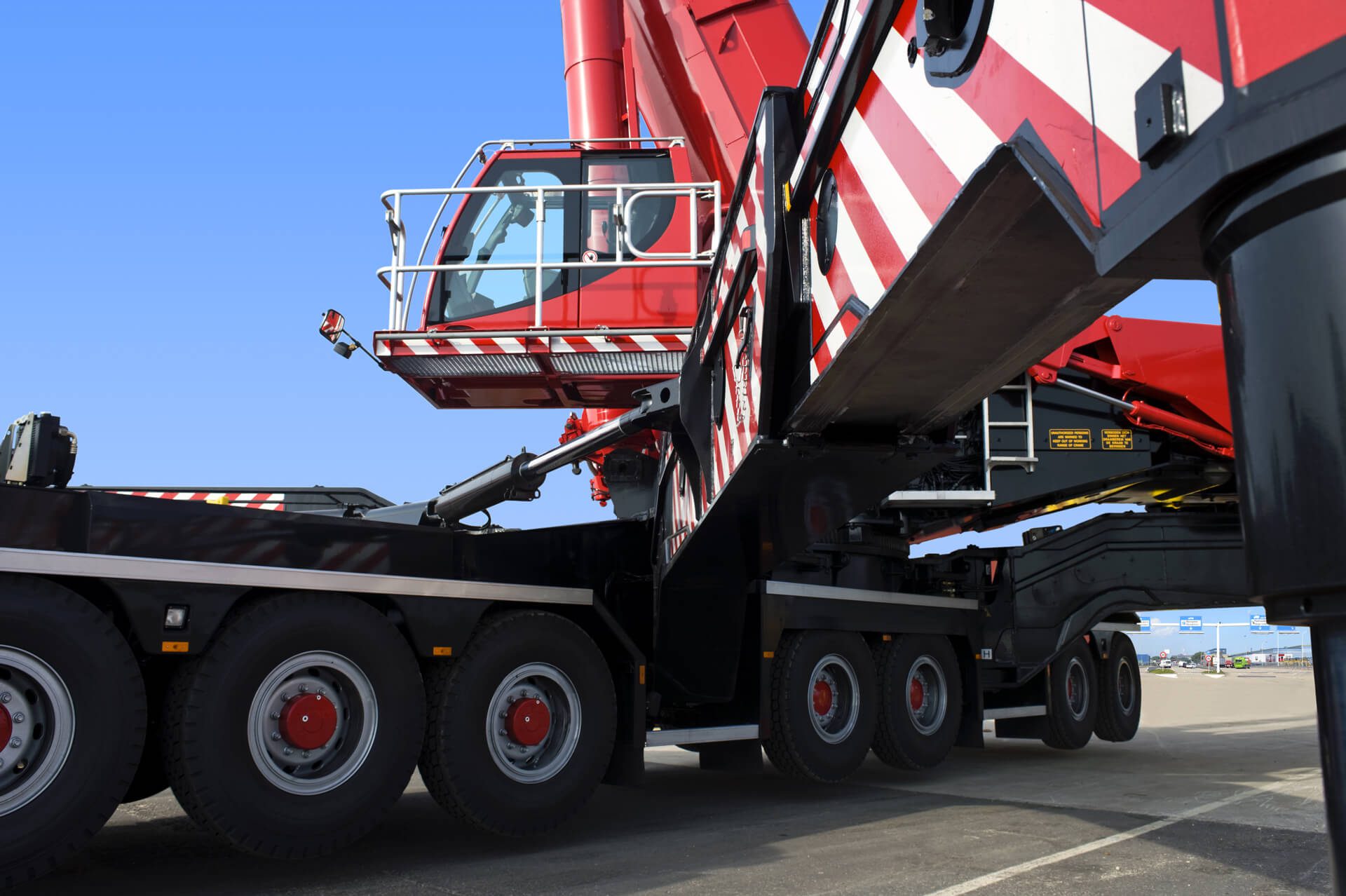
When Melbourne’s Collins Street precinct began its latest wave of vertical expansion in 2024, project managers confronted a familiar challenge that has defined Australian urban construction for decades: how to lift substantial loads in impossibly tight spaces without disrupting the surrounding cityscape. The answer, as it has been for countless high-density projects across Sydney, Brisbane, and Perth, lay in the distinctive geometry of luffing cranes—machines whose variable-angle jibs can fold nearly vertical, operating within footprints that would make traditional tower cranes logistically impossible.
The question of luffing crane hire costs has become increasingly urgent as Australian cities continue their density transformation, with urban infill projects and constrained site conditions becoming the norm rather than the exception. Understanding these costs requires navigating a complex intersection of equipment specifications, site-specific logistics, regulatory compliance frameworks, and the fundamental economics of specialized heavy machinery deployment.
The Financial Architecture of Luffing Crane Deployment
Luffing crane hire in Australia operates on a fundamentally different cost structure than conventional tower crane rental. Where standard tower cranes might command weekly rates between eight thousand and fifteen thousand dollars depending on capacity and configuration, luffing cranes typically begin at approximately twelve thousand dollars weekly for smaller 40-meter models, escalating to thirty thousand dollars or more for heavy-lift variants exceeding 60 meters in height with load capacities approaching twenty tonnes.
These baseline figures represent only the equipment rental component. The total financial commitment encompasses multiple additional layers that significantly impact project budgets. Initial mobilization costs—covering transportation, assembly, and commissioning—routinely exceed fifty thousand dollars for metropolitan deployments, with demobilization adding another substantial sum at project completion. In constrained urban environments where road closures require coordination with local councils and specialized heavy haulage permits, these logistics costs can inflate by thirty to fifty percent above baseline estimates.
The monthly cost trajectory for sustained luffing crane hire typically ranges between forty-five thousand and one hundred twenty thousand dollars, though this spectrum varies considerably based on machine specifications, geographic location, and competitive market dynamics. Projects in regional centers often face premium pricing due to increased transport distances and limited equipment availability, while metropolitan markets benefit from greater supplier competition and proximity to crane depots.
Site Constraints and the Premium for Precision
The fundamental value proposition of luffing cranes emerges from their unique mechanical configuration. Unlike conventional tower cranes whose horizontal jibs require substantial oversail clearance—potentially extending twenty to forty meters beyond site boundaries—luffing cranes achieve their operational envelope through vertical jib movement. This capability proves essential when construction sites abut property lines, heritage buildings, or active thoroughfares where airspace encroachment would trigger regulatory prohibitions or astronomical insurance premiums.
Australian construction projects increasingly confront these spatial constraints as urban consolidation policies drive development into established neighborhoods. Sydney’s inner-ring suburbs exemplify this pattern, where residential towers rise on parcels barely larger than tennis courts, surrounded by occupied buildings whose owners possess legal rights to airspace protection. In such contexts, the cost differential between luffing and conventional cranes becomes irrelevant—luffing configurations represent the only technically feasible option.
This geographic and spatial specificity explains regional cost variations across Australian markets. Projects in Melbourne’s Docklands precinct or Brisbane’s South Bank might access competitive luffing crane rates due to sustained demand and multiple suppliers maintaining equipment inventories in these construction hotspots. Conversely, a comparable project in Hobart or Darwin could face twenty to forty percent cost premiums simply due to equipment scarcity and mobilization distances.
Regulatory Frameworks and Compliance Costs
Australian crane operations function within a comprehensive regulatory architecture defined by state-based WorkSafe authorities, national Australian Standards, and the overarching Work Health and Safety regulations that govern construction site safety. For luffing cranes specifically, compliance with AS 1418 (Cranes, Hoists and Winches) and AS 2550 (Cranes—Safe Use) establishes minimum operational standards that directly impact hire arrangements and associated costs.
Every luffing crane deployment requires certified crane operators holding high-risk work licenses specific to the crane classification, with typical operator wages ranging from forty-five to seventy dollars per hour depending on experience and shift conditions. Projects requiring extended operational hours or weekend work face penalty rates that can double these labor costs. Additionally, WorkSafe regulations mandate qualified doggers for load attachment and signaling, traffic controllers for crane movements affecting public thoroughfares, and engineering certification for crane installation and site-specific load charts.
These regulatory requirements create unavoidable cost floors beneath luffing crane hire arrangements. A project anticipating twelve months of crane utilization must budget not merely for equipment rental but for the complete operational ecosystem—including weekly safety inspections, monthly maintenance interventions, annual major servicing, and comprehensive insurance coverage addressing both equipment damage and third-party liability. These ancillary costs typically add twenty-five to thirty-five percent to base hire rates, transforming a nominal fifty thousand dollar monthly crane rental into a seventy thousand dollar total operational expenditure.
The Franna Factor and Equipment Substitution Economics
While luffing cranes dominate high-rise construction discourse, Australian projects increasingly evaluate equipment alternatives based on site-specific requirements and cost optimization. Franna crane hire, particularly in regional markets such as the Southern Highlands where development scales differ markedly from metropolitan patterns, presents a compelling counterpoint to the luffing crane proposition.
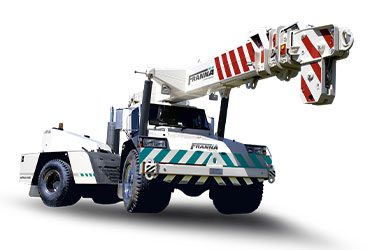
Franna cranes—pick-and-carry mobile cranes distinguished by their compact dimensions and taxi-crane maneuverability—occupy a different operational niche. With lift capacities typically ranging from ten to twenty-five tonnes and operational economics favoring short-duration deployments, franna crane hire southern highlands and similar regional contexts costs substantially less than luffing alternatives. Daily rates between eight hundred and two thousand dollars make Franna cranes economically attractive for projects requiring intermittent heavy lifting rather than continuous vertical transportation.
This cost differential reflects fundamental equipment utilization patterns. Luffing cranes justify their premium pricing through sustained availability across project durations measured in months or years, functioning as vertical transportation infrastructure. Franna cranes operate as tactical lifting tools, mobilized for specific tasks before demobilizing within days. For the low-to-medium rise construction that characterizes much regional Australian development—where building heights rarely exceed eight to twelve stories—Franna configurations often provide sufficient capacity without luffing crane financial commitments.
Market Dynamics and Strategic Procurement Considerations
The Australian luffing crane hire market reflects broader construction industry cycles, with equipment availability and pricing responding to development pipeline fluctuations. The residential construction boom preceding 2022 tightened crane availability across major markets, with some contractors reporting twelve to eighteen month lead times for luffing crane procurement on premium urban sites. These supply constraints pushed hire rates to historical peaks, with some metropolitan projects reportedly paying premium rates approaching forty percent above standard pricing.
Subsequent market softening has moderated these pressures, though structural equipment shortages persist. Australia’s crane fleet requires continuous renewal as aging machines reach end-of-service thresholds, yet equipment importation faces extended lead times given the specialized manufacturing requirements of luffing configurations. Major crane hire companies typically maintain luffing inventories representing tens of millions of dollars in capital investment, costs ultimately reflected in hire rate structures.
Sophisticated construction firms increasingly approach luffing crane procurement through strategic supplier relationships and early equipment commitment. Projects securing crane reservations eighteen to twenty-four months before anticipated deployment can negotiate favorable rates and guarantee availability, while late-stage procurement exposes projects to spot market pricing and equipment substitution risks. This procurement timing dynamic can generate cost variations of fifteen to twenty-five percent for otherwise identical equipment deployments.
The Infrastructure Investment Equation
As Australian cities continue their vertical trajectory and construction sites become progressively more constrained, luffing crane hire costs represent not merely project expenses but strategic investments in urban development capability. The premium pricing these machines command reflects their unique solution to the geometric puzzle of building upward in spaces originally designed for much different purposes.
For industry professionals evaluating crane requirements, the cost question extends beyond nominal hire rates to encompass total project economics—considering not merely what luffing cranes cost, but what construction configurations they enable and what alternatives they displace. In Australia’s evolving urban landscape, where density defines development opportunity, that calculation increasingly favors the distinctive silhouette of luffing jibs against city skylines.